
Quick summary
- A VPP coordinates many small distributed resources so they can provide meaningful grid value at scale.
- Controllable building loads, including appliance-level and plug loads, can be part of that flexibility if they are measured, connected, and dispatchable.
- Demand response is often the first operational step toward VPP participation.
- The main challenge is not just technology; it is baselining, customer comfort, cybersecurity, program design, and verification.
- Plug-load control is a pathway from savings to VPP readiness.
Virtual power plants are often discussed in terms of rooftop solar, batteries, electric vehicles, and smart thermostats. Those resources matter, but an important part of the VPP story is less visible but hiding in plain site: ordinary electrical devices inside commercial buildings, campuses, schools, municipal facilities, and portfolios.
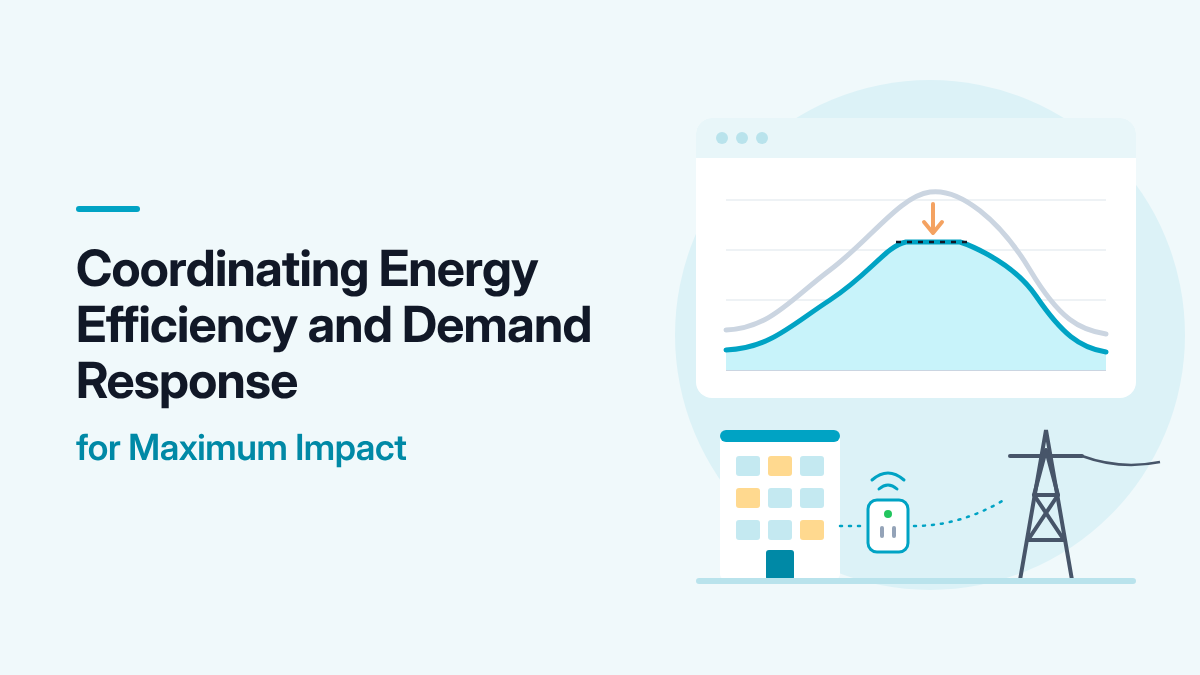
A virtual power plant (VPP) aggregates distributed energy resources and controllable loads so they can act like a coordinated grid resource. In practice, that can mean shifting, reducing, or dispatching demand across many sites during periods of high cost, grid stress, or utility need. The opportunity is to add new generation and make existing demand more flexible.
Why VPPs are gaining attention
Electric demand is becoming harder to plan around. Electrification, data centers, AI infrastructure, cooling demand, and aging grid assets are increasing pressure on utilities and grid operators. More generation, transmission, and distribution capacity remains necessary, but infrastructure development can be slow and expensive.
VPPs offer a complementary approach: coordinate resources that are already distributed across the grid. A Wall Street Journal article included in the BOSS source folder described the “power plant hiding in plain sight” concept: large amounts of flexible capacity may already exist in distributed devices. The exact value depends on location, program rules, customer participation, and asset performance, but distributed flexibility can reduce some pressure on centralized infrastructure.
What counts as a VPP resource?
A VPP can include supply-side and demand-side assets: batteries, solar-plus-storage systems, smart thermostats, EV chargers, water heaters, backup generators, and controllable building systems. It can also include smaller loads that become useful when aggregated.
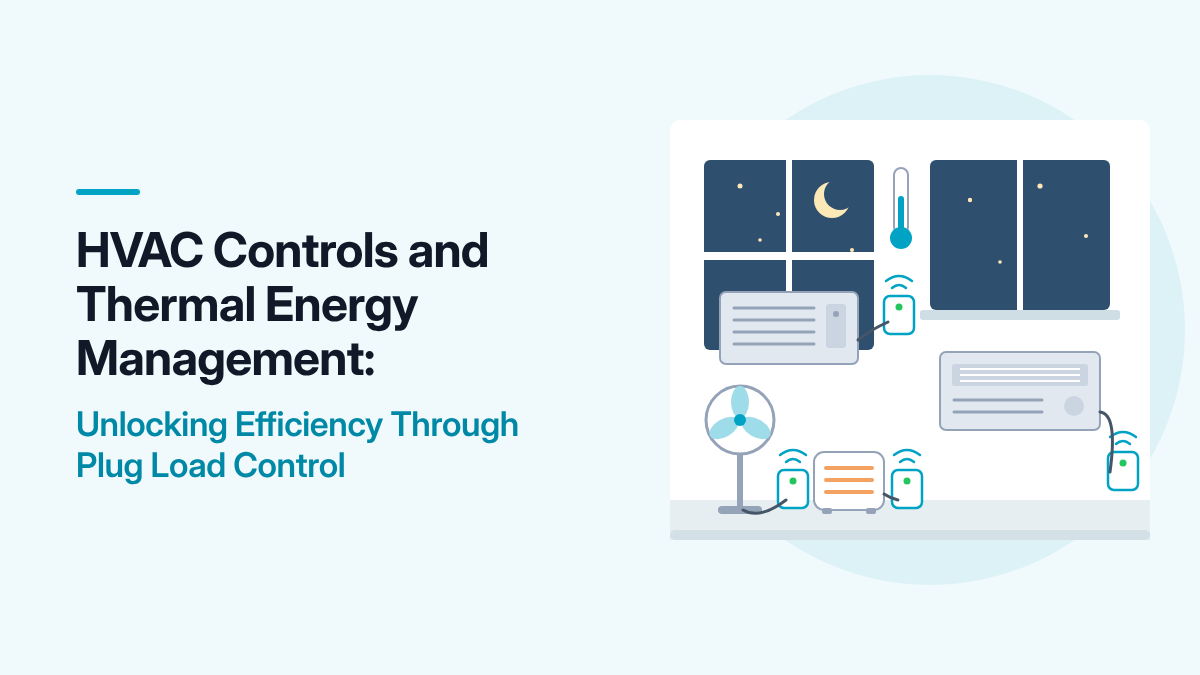
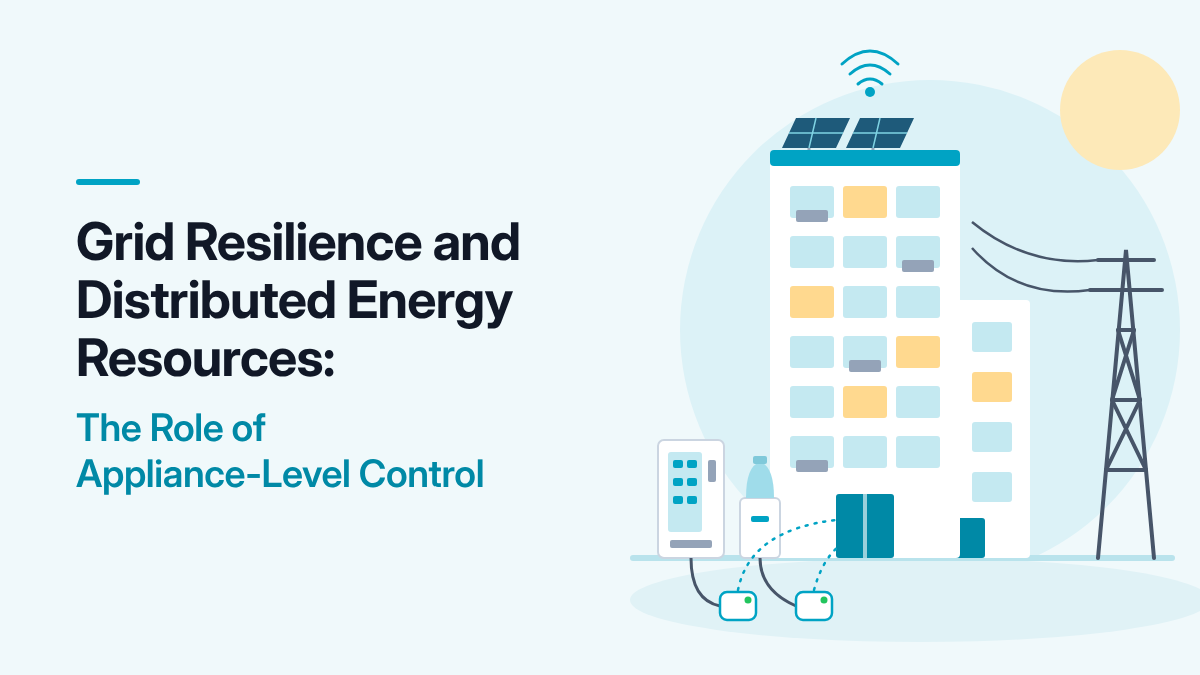
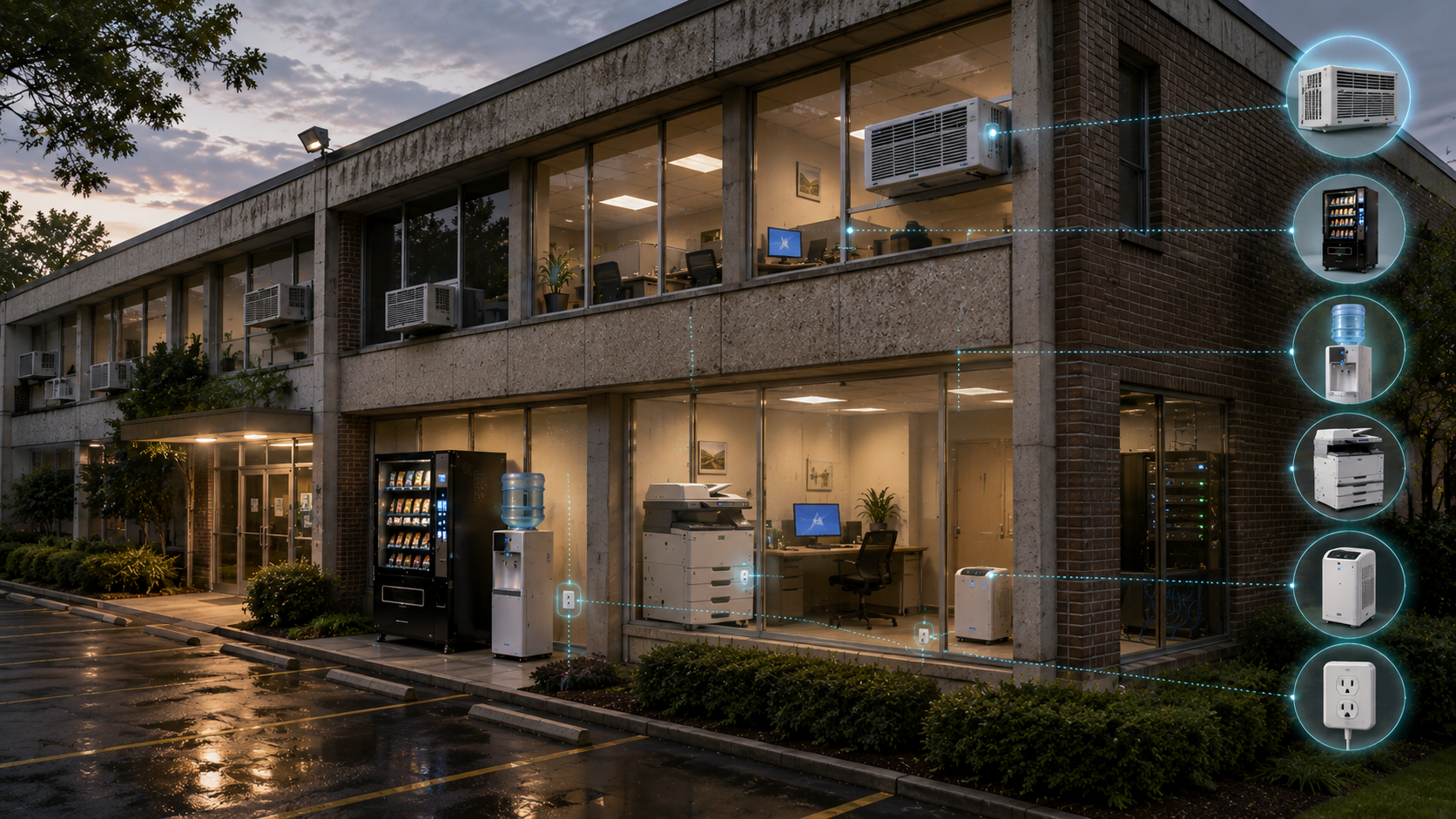
There is an often-overlooked VPP category: appliance-level loads such as window A/C units, PTACs, vending machines, water coolers, dehumidifiers, air purifiers, office equipment, refrigeration equipment, and other devices outside traditional building automation. Individually, many are modest. Across a building, campus, city portfolio, or utility territory, they can become meaningful.
This is where VPP thinking changes the energy-management conversation: if a device can be measured, controlled, scheduled, and verified, it may become a flexible demand asset.
From efficiency to dispatchability
Energy efficiency and VPP participation are related, but they are not the same thing. Efficiency asks whether unnecessary energy use can be reduced during unoccupied hours, weekends, holidays, or low-use periods. Dispatchability asks whether a resource can respond when the grid or a program operator needs it.
The same control foundation can support both. A facility might first schedule vending machines, water coolers, or window A/C units around occupancy to cut waste. Over time, those same devices may be grouped for peak-demand management or demand response events. Practical savings today can create readiness for demand response and future VPP participation.
That progression matters because operators need to know how much load is available, how quickly it can respond, and whether the action will disrupt building operations.
Operational questions before aggregation
Successful VPP strategies are built from operational details, not abstract capacity estimates. Teams need answers to practical questions:
1. Which loads are controllable? Non-critical, schedulable, or cyclical loads are usually easier to manage than mission-critical equipment.
2. What is the baseline? A VPP needs a credible understanding of normal consumption so load reduction can be measured.
3. What are the constraints? Comfort, safety, refrigeration requirements, tenant needs, and equipment life all shape control strategies.
4. How is control secured? Connected energy devices need appropriate access control, communications security, and operational safeguards.
5. How will results be verified? Device-level or circuit-level data can support measurement, reporting, and settlement.
The tradeoffs
VPPs are promising, but they are not magic. Aggregating small loads can involve enrollment friction, installation logistics, communications reliability, data integration, and program complexity. Customers may be skeptical if control strategies are not transparent or incentives are too small.
There is also a risk of overestimating flexible capacity. A portfolio may contain many devices, but only a subset will be available at the right time with acceptable operational impact. Good VPP design depends on conservative baselines, opt-out rules, event testing, and continuous performance data.
Why buildings matter
Buildings are already full of distributed electrical assets. Many are unmanaged simply because they fall below the threshold of traditional energy projects. VPPs create a reason to look again. The goal is not to control everything all the time. It is to identify flexible loads, connect them securely, use them intelligently, and verify their contribution.
For building owners, this can begin with reduced waste and better visibility. For utilities, it can create demand-side capacity that is faster to mobilize than new infrastructure. For energy managers, it reframes plug loads and appliance-level devices as part of a broader grid-interactive strategy.
Key takeaways
- VPPs depend on aggregation: many small resources can become valuable when coordinated.
- Demand-side flexibility is as important as distributed generation.
- Existing buildings contain overlooked controllable loads that may support both savings and grid programs.
- Measurement, verification, cybersecurity, and customer constraints determine whether VPP capacity is real.
- The practical starting point is often simple: find unmanaged loads, measure them, control them carefully, and build toward dispatchable flexibility over time.