

Quick summary
As electricity demand grows and peak periods become more expensive to serve, demand response is becoming an operating strategy: identify flexible loads, control them in ways occupants can tolerate, measure the reduction, and aggregate many small actions into meaningful capacity.
For commercial buildings, campuses, municipal facilities, and schools, one underused opportunity is appliance-level load. Window A/C units, PTACs, vending machines, water coolers, dehumidifiers, plug-in heaters, refrigeration equipment, and other distributed devices are often outside traditional building automation systems. Individually, many of these loads look too small to matter. Across a portfolio, they can become a practical source of flexible demand.
Why demand response matters now
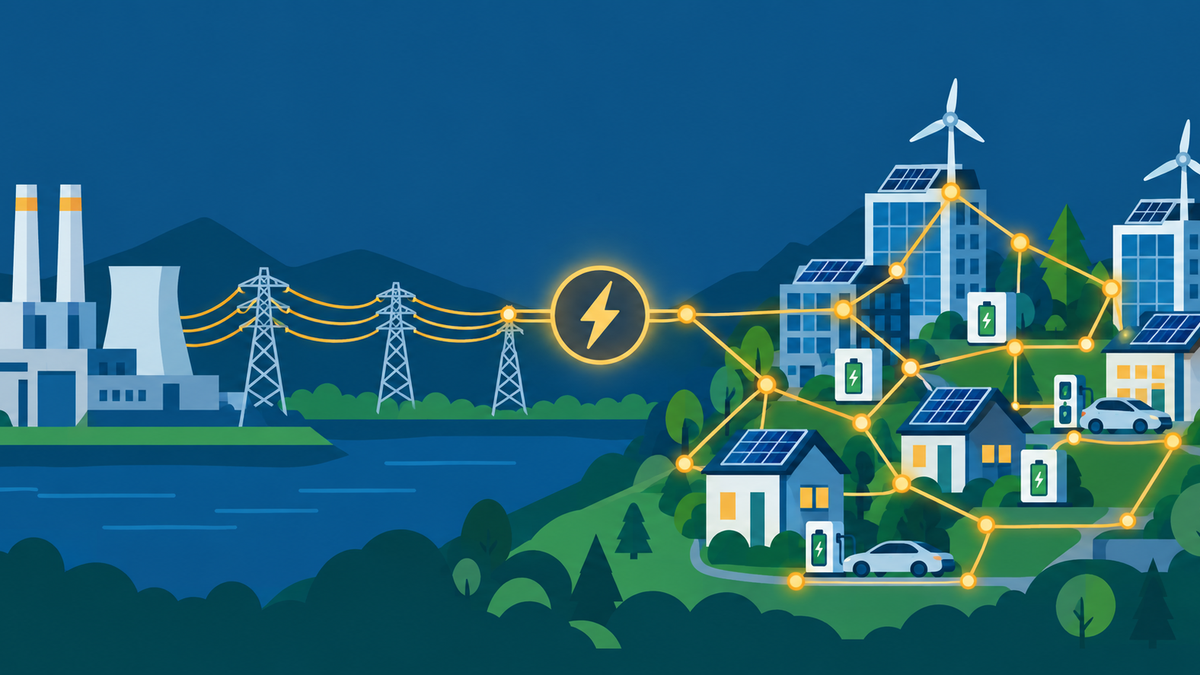
The grid is being asked to do more while many facilities are trying to control operating costs. Electrification, data center growth, extreme weather, and aging infrastructure all increase the value of demand that can be reduced or shifted at the right time. New generation and transmission remain important, but they take time. Demand response uses existing customer-side flexibility to reduce stress during high-cost or high-risk hours.
Traditional programs often focus on large loads: central HVAC, industrial processes, lighting reductions, backup generation, or major equipment schedules. Those resources still matter. But older buildings also contain hundreds or thousands of smaller plug-in appliances that run after hours, on weekends, during holidays, or when full operation is not necessary.
The operational question is not simply, “Can this device be turned off?” It is, “Can this load be controlled predictably, safely, measurably, and with acceptable impact?” That is where demand response becomes an energy-management discipline rather than a one-time event.
The role of appliance-level control
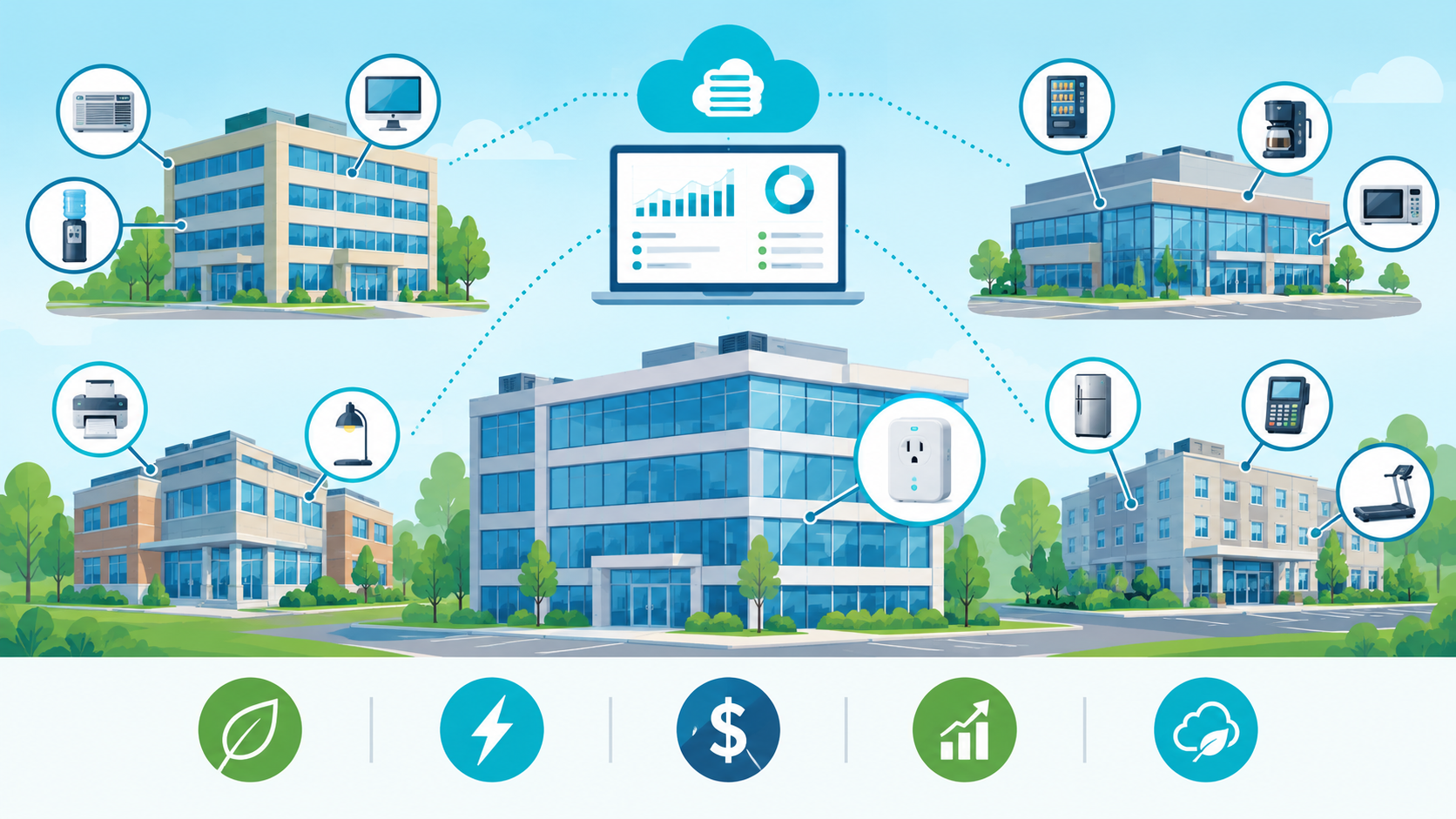
Common appliances that can be controllable include window A/C units, PTACs, vending machines, water coolers and fountains, dehumidifiers, air purifiers, plug-in heaters, office equipment, and refrigeration equipment. These are often unmanaged because they sit outside central building automation. Facility teams may know they consume energy, but manual control across floors, campuses, or city portfolios is rarely practical.
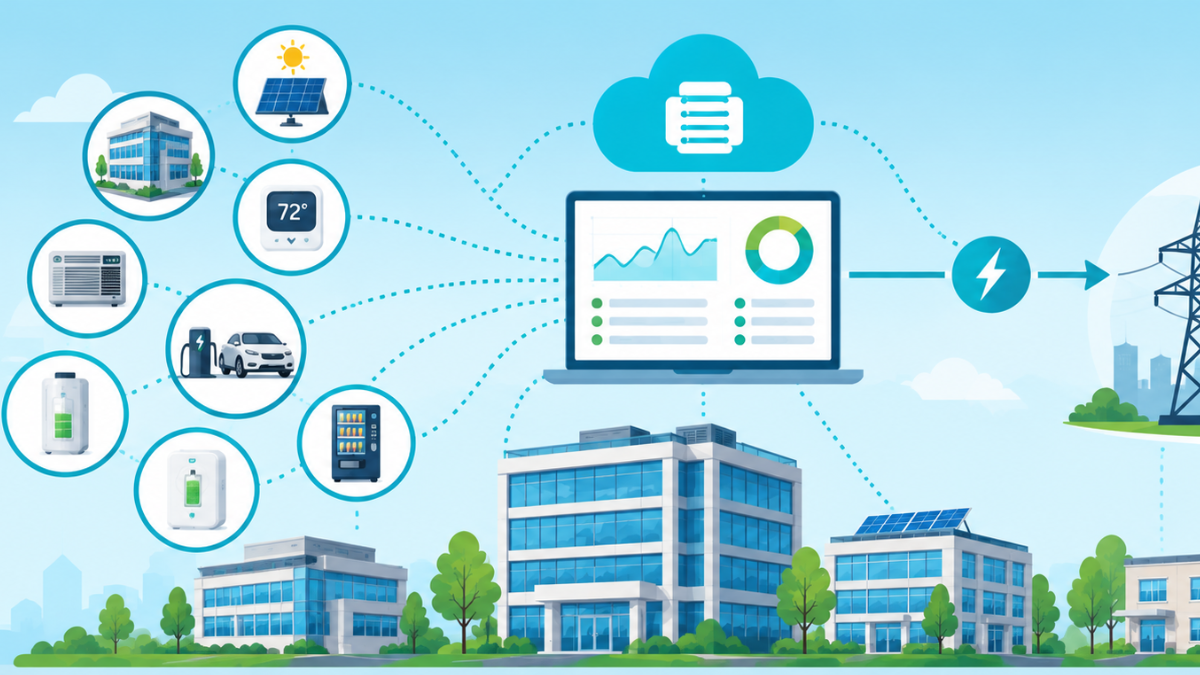
A scalable model starts with visibility. Device-level measurement helps establish baselines, identify which appliances consume the most energy, and determine which schedules or event strategies are realistic. Control can then be applied by building, floor, room, device type, operating schedule, or custom group. During an event, selected devices can be reduced, cycled, or turned off according to pre-approved rules.
This matters because demand response programs depend on trust. Utilities need confidence that promised reductions will appear when called. Building owners need confidence that participation will not create occupant complaints, equipment problems, or operational confusion. Measurement, grouping, scheduling, and reporting are the bridge between those needs.
Case Study Lessons
For a large, northeastern city, BOSS Controls installed smart plugs on devices across municipal, university, and commercial facilities, including window air conditioning units, vending machines, and water coolers. The project goal included demonstrating plug-load power measurement and control, aggregating plug loads across multiple buildings for demand response events, and supporting peak demand reduction.
Schedule-based shutdown during unoccupied periods produced energy savings in excess of 50% for targeted plug loads, with simple paybacks under one year and as short as four months for high-consuming equipment. The demand response lesson is broader than the savings figure: the same infrastructure used to reduce after-hours waste can also create a controllable load resource for peak events.
Another example is involves legacy window A/C loads in older office space that involved over 400 grid-interactive smart plugs. Benefits included off-hours savings, demand response revenue, 765 MWh reduced during the May–September season, and 481 kW of additional load under management. It is a practical example of existing equipment becoming grid-interactive without replacing major building systems.
Tradeoffs and implementation considerations
Appliance-level demand response is not automatic value. It requires thoughtful design.
First, not all loads are good candidates. High-consuming equipment with predictable idle periods is typically more useful than low-consuming devices or devices needed continuously. Second, occupant comfort and service levels matter. Cycling window A/C during a peak event may be acceptable under one set of conditions and unacceptable under another. Third, controls should include override logic, exception management, and clear accountability for who can change schedules.
Cybersecurity and communications also matter. Demand response turns energy devices into connected operational assets, so remote control should be paired with secure connectivity, access controls, and reporting. Measurement and verification should be planned from the start: baselines, event performance, and post-event reporting determine whether a strategy is credible.
From isolated demand response events to flexible portfolios
The biggest shift in demand response is the move from isolated curtailment to portfolio flexibility. A single vending machine, water cooler, or window A/C unit is not a grid resource by itself. Hundreds or thousands of coordinated devices across buildings can be.
For facility leaders, this creates a useful sequence: reduce waste first, learn how loads behave, then decide which loads can participate in demand response. For utilities and energy partners, it expands the resource base beyond the largest customers and the largest equipment. For the grid, it makes flexibility available where electricity is already being consumed.
Demand response works best when it is planned, measured, automated, minimally disruptive, and repeatable. Appliance-level control is one practical path toward that future.
Key takeaways
- Demand response is becoming an ongoing flexibility strategy, not just an emergency curtailment tool.
- Plug-in appliances and distributed loads are often overlooked because they sit outside traditional building automation systems.
- Device-level measurement, grouping, scheduling, and reporting are essential for credible demand response participation.
- Case studies show how smart plug control has been used to reduce waste and support demand response readiness.
- The best candidates are loads with meaningful consumption, predictable idle periods, and low operational risk when controlled.
- Portfolio-scale aggregation can turn many small appliance-level actions into meaningful flexible capacity.