
Quick Summary
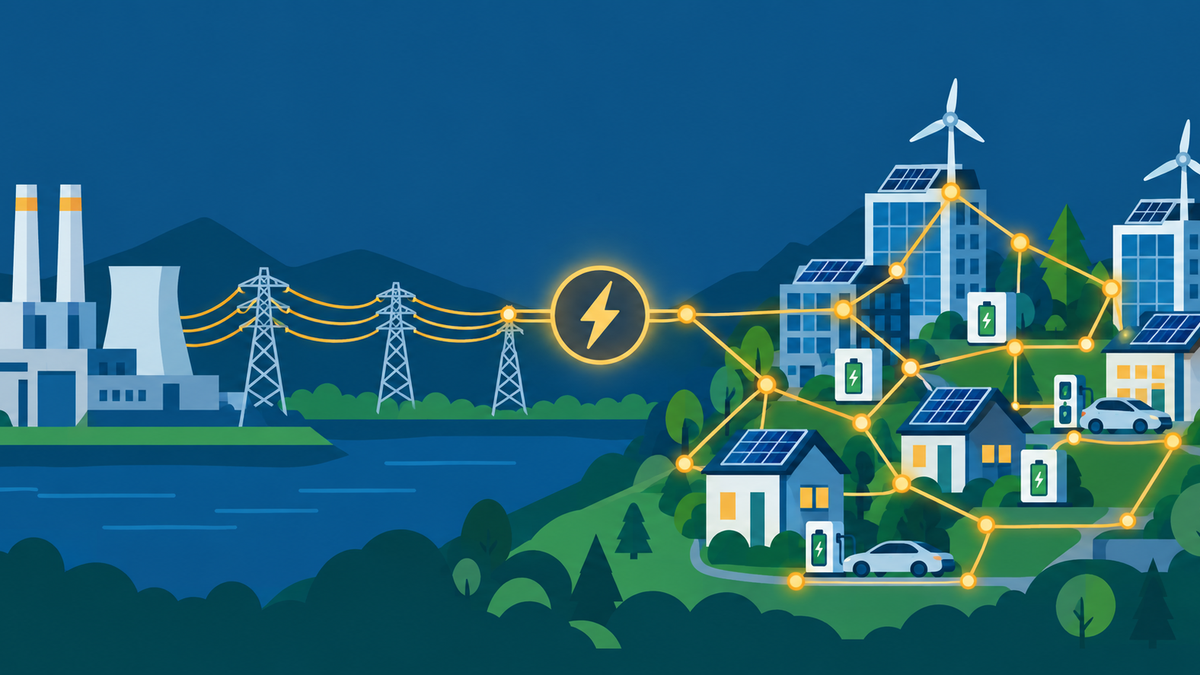
Grid resilience, the ability of electrical systems to withstand disruptions and recover quickly, is increasingly dependent on distributed energy resources
(DER). Rather than relying solely on centralized generation and transmission, modern grids integrate DER including solar, battery storage, demand
response, and controllable loads to create multiple pathways for power flow, faster response to grid stress, and redundancy when major infrastructure
fails. For facility managers, understanding DER’s role in grid resilience means recognizing how your building’s energy assets can simultaneously reduce
your costs and support grid stability.
The Shift From Hub-and-Spoke to Distributed Grids
For decades, the electrical grid followed a simple model: large power plants generated electricity, transmission lines carried it long distances, and
distribution networks delivered it to customers. This centralized architecture worked well when demand was predictable and generation capacity was
easily scalable. But that era is ending.
Today’s grid faces mounting pressures: electrification is driving peak loads higher, renewable energy generates power when weather permits (not when
demand peaks), and aging transmission infrastructure struggles to meet capacity demands. A single outage at a major transmission line or large
generator can cascade through the system, affecting thousands of customers. Climate events, including extreme heat, flooding, and ice storms,
increasingly threaten both generation and transmission assets [2].
The answer lies in decentralization. Rather than depending entirely on remote power plants and aging transmission lines, modern grid resilience is being
rebuilt with resources located closer to where power is consumed: rooftop solar, battery storage, electric vehicle chargers, demand response capabilities,
and controllable appliances inside buildings. This shift is not theoretical. The Federal Energy Regulatory Commission (FERC) has established standards for
integrating distributed resources into utility operations [1], and major utilities are redesigning their networks around this new architecture.
What Are Distributed Energy Resources?
DER encompasses a diverse suite of technologies already operating in and around buildings:
- Solar photovoltaic systems on roofs and parking structures
- Battery energy storage systems (BESS) that store power for peak periods
- Demand response capabilities that allow loads to be reduced or shifted during grid stress
- Controllable appliances and plug loads that can operate flexibly based on grid conditions
- Electric vehicle charging managed to support grid stability
- Combined heat and power (CHP) systems in hospitals and industrial facilities
- Microgrid architectures that allow buildings or clusters to operate independently if needed
Individually, these resources may seem small. A 10-kW rooftop solar system, a smart plug that turns off an appliance for 15 minutes during peak demand,
or a building that shifts HVAC operation by 30 minutes all appear marginal. But when thousands of buildings coordinate these actions simultaneously, the
aggregate effect becomes substantial. A utility managing demand response across 1,000 buildings controlling 10,000 loads can dispatch 10 MW of
instantaneous flexibility, equivalent to a gas turbine generator but available in seconds rather than minutes [6].
Why Grid Resilience Matters More Than Ever
Grid resilience has moved from a technical concept into a critical business and policy issue for three reasons:
1. Increasing Peak Demand
AI data centers, electrified transportation, heat pumps, and industrial processes are driving electricity demand upward faster than transmission
infrastructure can expand. Building new transmission lines takes an average of over 6 years, and often more than 10 years, due to permitting and siting
delays [4]. Deploying DER in existing buildings takes months. When peak demand threatens to exceed supply, utilities increasingly rely on demand
response to avoid rolling blackouts [6].
2. Weather Extremes
The February 2021 Texas freeze, known as Winter Storm Uri, caused numerous outages, derates, and failures across electric generating plants, forcing
ERCOT to cut off power to millions of customers [2]. Heat waves, wildfire seasons, and other extreme events have demonstrated that aging transmission
infrastructure is vulnerable to weather stress. Localized DER, especially storage, allows critical facilities such as hospitals, data centers, and government
buildings to continue operating even when grid supply is disrupted [3].
3. Renewable Integration
Solar and wind generation are now cost-competitive with fossil fuels, but their output varies hourly and seasonally. A grid with 60 percent renewable
generation cannot simply “dispatch” solar when the sun sets. Instead, it must use storage, demand response, and flexible loads to smooth supply-demand
mismatches. DER provides the flexibility needed to maintain stability [3].
FERC has formalized this in regulatory frameworks requiring utilities to plan for DER participation in ancillary services (frequency response, voltage
support) and to compensate DER operators when they provide grid services [1]. This means your building’s energy flexibility now has explicit market
value.
How DER Strengthens Grid Resilience
Distributed Redundancy
Centralized grids fail catastrophically: one transmission outage or generator failure can cascade into blackouts affecting millions. Distributed resources
create multiple independent pathways for power flow. If one transmission corridor is damaged, power can flow through alternative routes and can be
supplemented by local generation. A building with rooftop solar and battery storage can island from the grid entirely during an outage, maintaining power to critical systems [3].
Rapid Frequency Response
When a large generator suddenly trips offline, the grid’s frequency drops rapidly (60 Hz is the nominal target in North America). If frequency falls too far,
the system destabilizes and blackouts spread. Traditional generators take minutes to respond. Battery storage and inverter-based resources respond in
milliseconds, fast enough to arrest frequency decline before cascades begin. This is why utilities now explicitly value fast-acting DER [3].
Load Flexibility
A grid where 20 percent of loads can be instantly reduced by 5 to 10 percent on command is fundamentally more resilient than one where loads are
fixed. This is why demand response has become a strategic grid resource. Buildings that can shift HVAC operation, reduce plug loads, or defer EV charging
during peak-stress events provide utilities with flexible capacity that would not exist otherwise [6].
Reduced Transmission Stress
DER located near load centers reduces the power that must flow through distant transmission lines. A community solar project or behind-the-meter
battery reduces the load that must be served by transmission. This not only increases resilience (lower transmission stress means fewer failures) but also
defers costly transmission upgrades [3].
Practical Implications for Facility Managers
Understanding DER’s role in grid resilience translates into several operational decisions:
1. Controllable Loads as Grid Assets
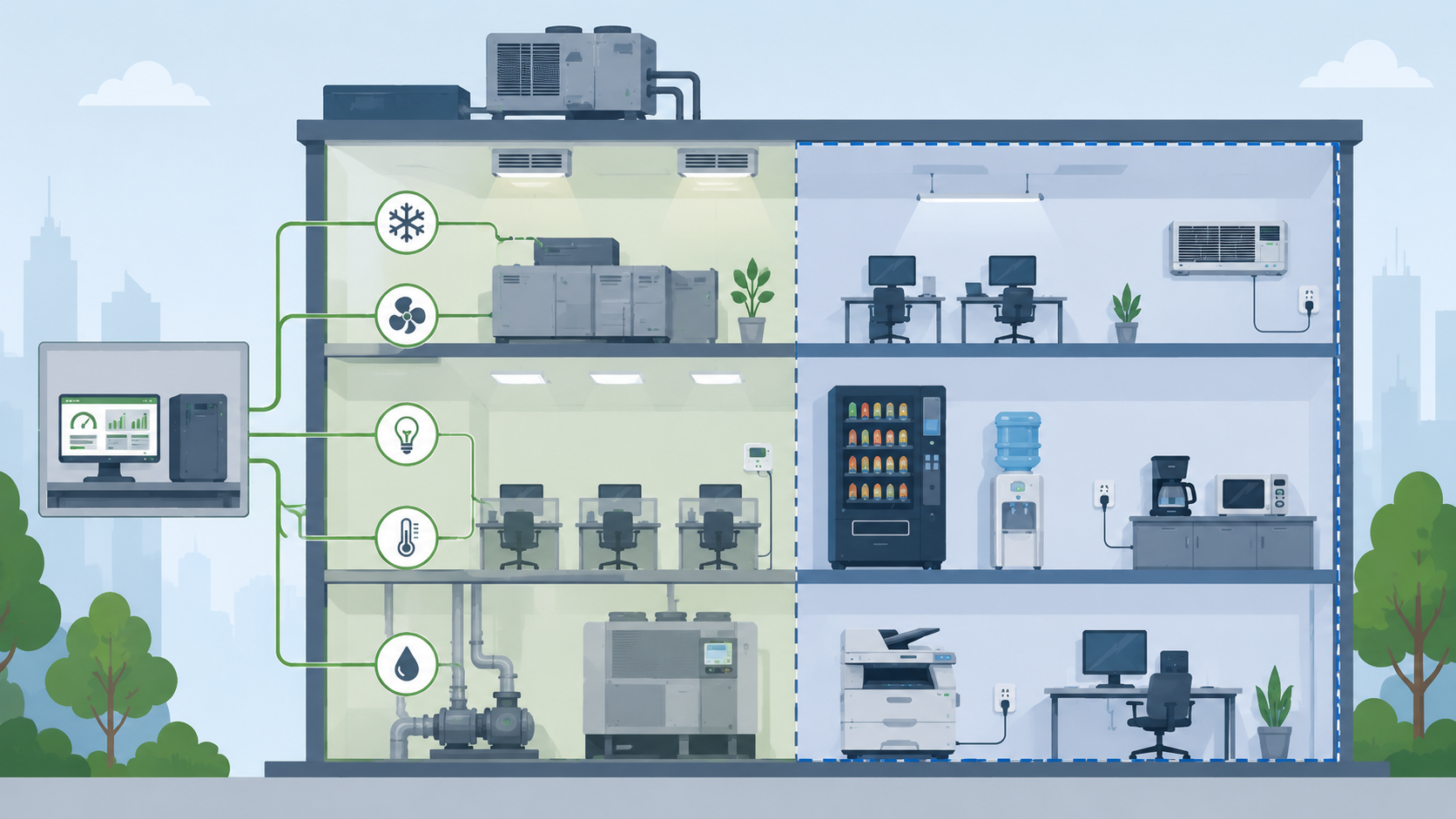
Many facility managers view plug loads, including window A/C units, vending machines, water coolers, and dehumidifiers, as incidental building
infrastructure. Modern grid architecture treats them as potential grid assets. Smart controls that allow these loads to be scheduled or rapidly reduced
during grid emergencies transform them from passive consumers into active participants in grid stability [3].
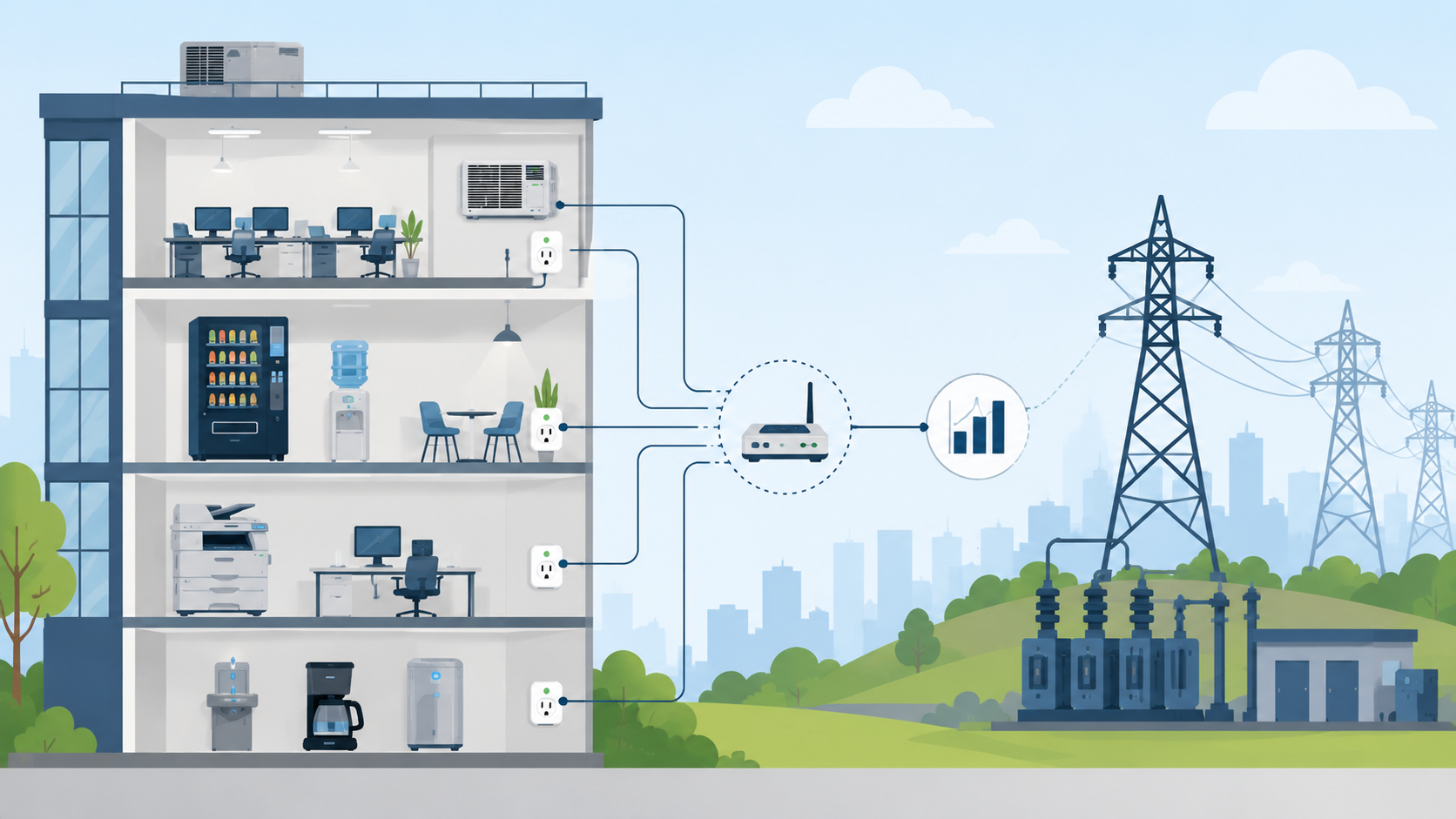
Implementation: Deploy sub-metering and smart load controls on high-consuming plug loads. Measure baseline energy consumption. Identify loads that
can be temporarily reduced (5 to 10 minutes) without affecting building function. Make these loads available for demand response through your utility’s
program [6].
2. Building Energy Storage
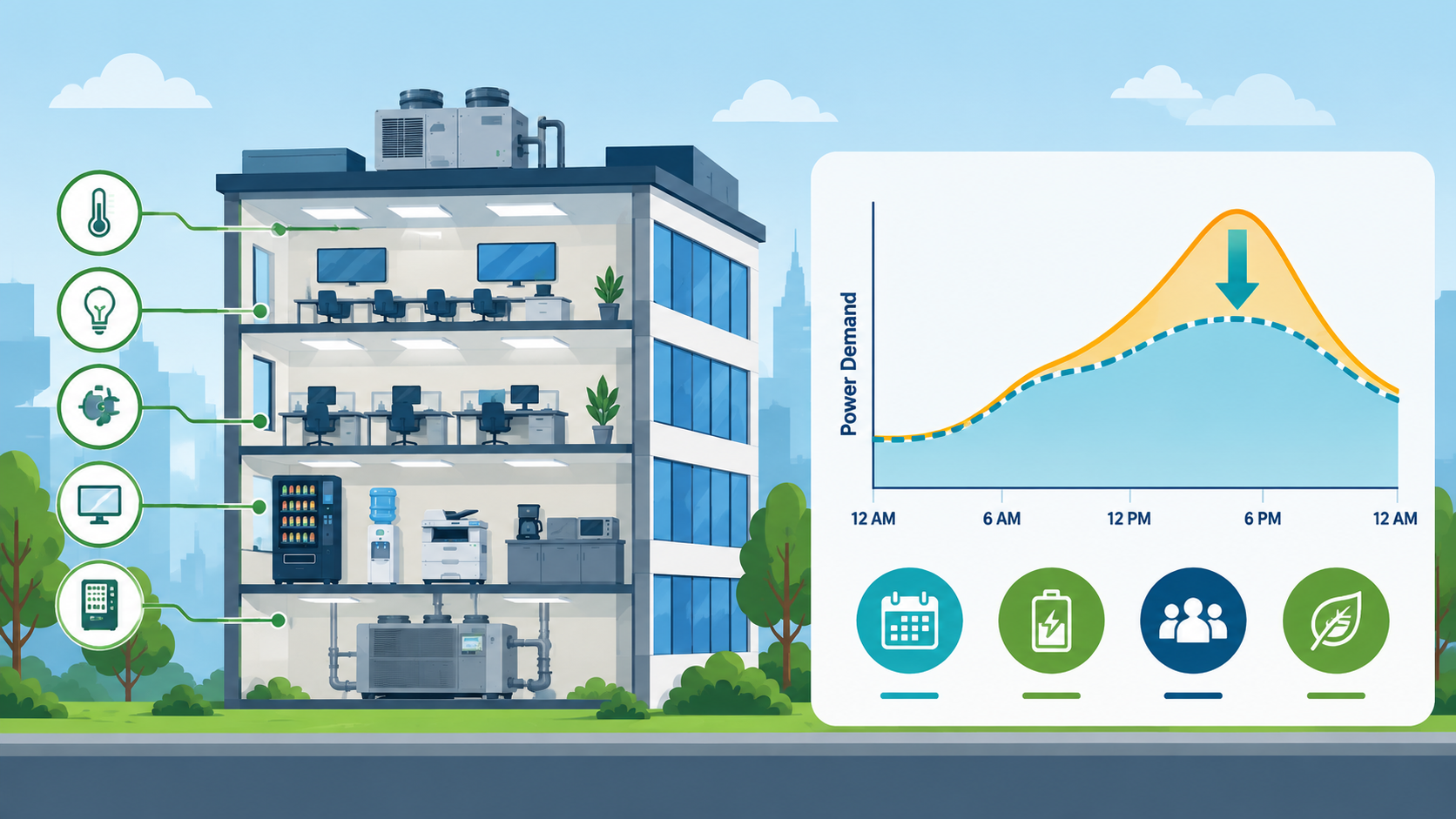
For buildings in regions with frequent peak-demand periods or high demand charges, battery storage creates dual value: it reduces energy consumption
during peak periods (lowering bills) and provides the battery to support the grid during emergencies. Battery economics have improved dramatically,
with utility-scale system costs projected to decline significantly through 2035 [5]. A 10 kWh system installed for $5,000 to $8,000 all-in can achieve
payback under 5 years in high-cost regions where demand charges are steep.
Implementation: Assess your building’s demand profile. Identify peak-demand periods when demand charges are highest. Evaluate whether a battery
system sized to shave 20 to 30 percent of peak could justify its cost through demand-charge savings alone. Additional grid service revenue is upside.
3. Demand Response Participation
Most utilities operate demand response programs offering incentives (dollars per kW) to buildings that reduce load on command during critical grid
periods. In PJM, the largest U.S. wholesale electricity market, demand response participants must reduce load when requested or face financial penalties,
and the 2025/2026 capacity price cleared at approximately $270 per MW-day [6]. Participation typically requires remote communication between your
building systems and the utility, and pre-approved load-reduction strategies.
Implementation: Contact your utility to understand available DR programs. Many programs now have minimal enrollment barriers and focus on small to
medium buildings. Connect your building’s energy management system to enable automated response. Verify that your load-reduction strategies are
comfort-safe (e.g., pre-cool buildings before a DR event so that short cycling does not exceed comfort setpoints).
4. Visibility and Measurement
DER only functions if operations can measure and verify what is happening. Facility managers should invest in real-time energy monitoring that provides
visibility at the circuit or device level, not just the whole-building meter.
Implementation: Install sub-metering or smart power monitors on major loads. Use energy management software to establish baselines, identify
anomalies, and track savings. Share this data with your utility when enrolling in grid programs.
The Business Case: Cost Reduction Plus Grid Contribution
For facility managers, the financial case for DER is compelling because it generates value through multiple channels:
- Energy cost reduction from shifting load away from peak periods or reducing consumption overall
- Demand charge reduction from peak shaving or load shifting
- Utility incentives for participating in energy efficiency or demand response programs
- Potential future revenue from aggregators or utilities purchasing flexibility
A 50,000-square-foot office building in a PJM load zone spending $500,000 annually on electricity could save 10 to 15 percent through demand response
participation and plug-load controls, which equals $50,000 to $75,000 annually. Across a portfolio of 10 buildings, this becomes $500,000 to $750,000 in
aggregate value. These figures are illustrative and depend on local rates, program terms, and building characteristics.
Emerging Opportunities: Virtual Power Plants and Aggregation
The next evolution in DER is aggregation: third-party companies (aggregators) now coordinate DER across hundreds of buildings, packaging their
flexibility into wholesale energy market bids or utility grid services contracts. This is called a Virtual Power Plant (VPP) [7].
The U.S. Department of Energy defines a VPP as “aggregations of distributed energy resources (DERs) that can balance electrical loads and provide utility-scale and utility-grade grid services like a traditional power plant” [8]. U.S. VPP capacity reached approximately 37.5 GW in 2025, and the DOE estimates it could scale to 80 to 160 GW by 2030, serving 10 to 20 percent of projected peak demand [7].
From a facility manager’s perspective, VPP participation means:
- You provide a service level (e.g., “reduce load 20% on 30-minute notice”)
- The aggregator coordinates your building with others to meet larger contracts
- You receive compensation, often through ESCOs or energy-as-a-service models
For newer buildings with smart controls, VPP participation requires minimal operational change but generates new revenue streams. FERC has explicitly
enabled this model through Order No. 2222, which allows DER aggregators to compete in all regional organized wholesale markets [1]. Major utilities are
beginning to purchase VPP capacity as a substitute for traditional generation [7].
Key Takeaways
- Grid resilience increasingly depends on distributed resources, not centralized generation and transmission alone. Your building’s energy flexibility
is now a strategic grid asset. - DER strengthens grids through redundancy, fast response, load flexibility, and reduced transmission stress. Understanding this helps facility
managers recognize why utilities encourage and compensate flexible energy management [3]. - For facility managers, DER participation is financially attractive: demand response programs, demand-charge savings, and energy storage
economics create a compelling ROI case independent of grid benefits [5][6]. - Implementation starts with visibility and controllability: invest in sub-metering, smart controls, and energy management software that enables
real-time measurement and automated response. - Utility program participation is low-friction: contact your utility to understand available demand response, efficiency incentive, or rate programs.
Enrollment is increasingly straightforward [6]. - Aggregation models (VPPs) are expanding rapidly. The DOE projects VPP capacity could reach 80 to 160 GW by 2030 [7]. Facilities with
sophisticated controls can participate in aggregation contracts, generating additional revenue from flexibility they are already capturing for cost
savings. - Plan for flexibility as part of building upgrades. When replacing HVAC systems, installing solar, or upgrading controls, design them to be grid
interactive. The marginal cost is small; the value, both to your building and to the grid, is substantial.
References
[1] Federal Energy Regulatory Commission, “Order No. 2222 Explainer: Facilitating Participation in Electricity Markets by Distributed Energy Resources,”2020. https://www.ferc.gov/ferc-order-no-2222-explainer-facilitating-participation-electricity-markets-distributed-energy[2] Federal Energy Regulatory Commission, “Final Report on February 2021 Freeze Underscores Winterization Recommendations.” https://www.ferc.gov
news-events/news/final-report-february-2021-freeze-underscores-winterization-recommendations[3] National Renewable Energy Laboratory, “Advancing Electric System Resilience with Distributed Energy Resources,” 2024. https://docs.nrel.gov/docs
fy24osti/90137.pdf[4] American Clean Power Association, “U.S. Permitting Delays Hold Back Economy, Cost Jobs,” 2024. https://cleanpower.org/wp-content/uploads
gateway/2024/04/ACP-Pass-Permitting-Reform_Fact-Sheet.pdf[5] National Renewable Energy Laboratory, “Cost Projections for Utility-Scale Battery Storage: 2025 Update,” 2025. https://www.nrel.gov/docs/fy25osti
93281.pdf[6] PJM Interconnection, “Demand Response Fact Sheet.” https://www.pjm.com/-/media/DotCom/about-pjm/newsroom/fact-sheets/demand-response
fact-sheet.pdf[7] U.S. Department of Energy, “Pathways to Commercial Liftoff: Virtual Power Plants 2025 Update.” https://liftoff.energy.gov/wp-content/uploads
2025/01/LIFTOFF_DOE_VirtualPowerPlants2025Update.pdf[8] U.S. Department of Energy, “Virtual Power Plants.” https://www.energy.gov/edf/virtual-power-plant