
Quick Summary
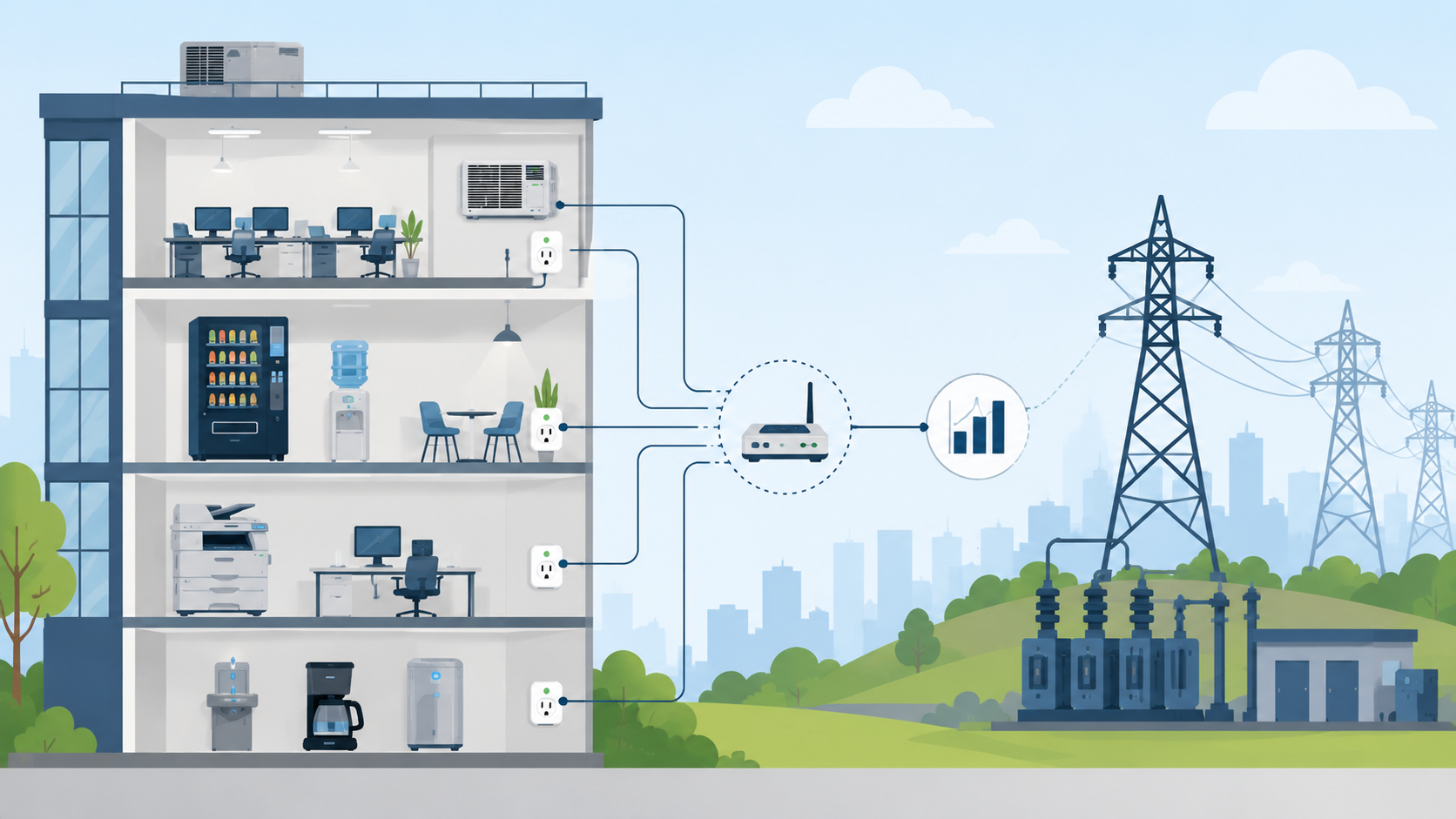
Demand response (DR) programs enable commercial buildings, campuses, and facilities to reduce or shift electricity use during peak grid periods in exchange for financial incentives. By making previously unmanaged plug-in appliances (e.g. window A/C units, PTACs, vending machines, water coolers, dehumidifiers, and other plug loads) visible and controllable, organizations can participate in DR without major capital upgrades. The same appliance-level controls that cut after-hours waste also create dispatchable capacity for grid programs, turning everyday equipment into flexible energy assets.
Why Demand Response Matters Now
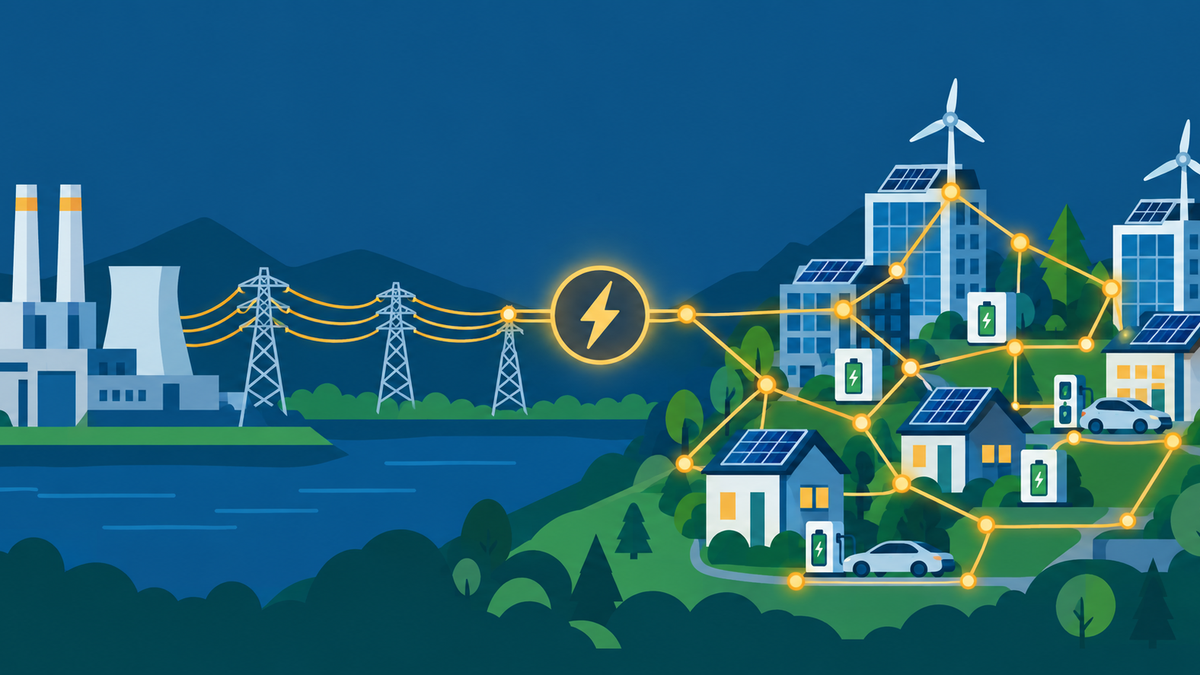
Electricity grids are under growing pressure. Rising peak demand, aging infrastructure, and the integration of variable renewable generation mean grid operators need flexible resources that can respond quickly to balance supply and demand. Traditionally, that flexibility came from large industrial loads or dedicated generation. But there’s a vast, underutilized resource hiding in plain sight: the millions of plug-in appliances running in commercial buildings, schools, and municipal facilities.
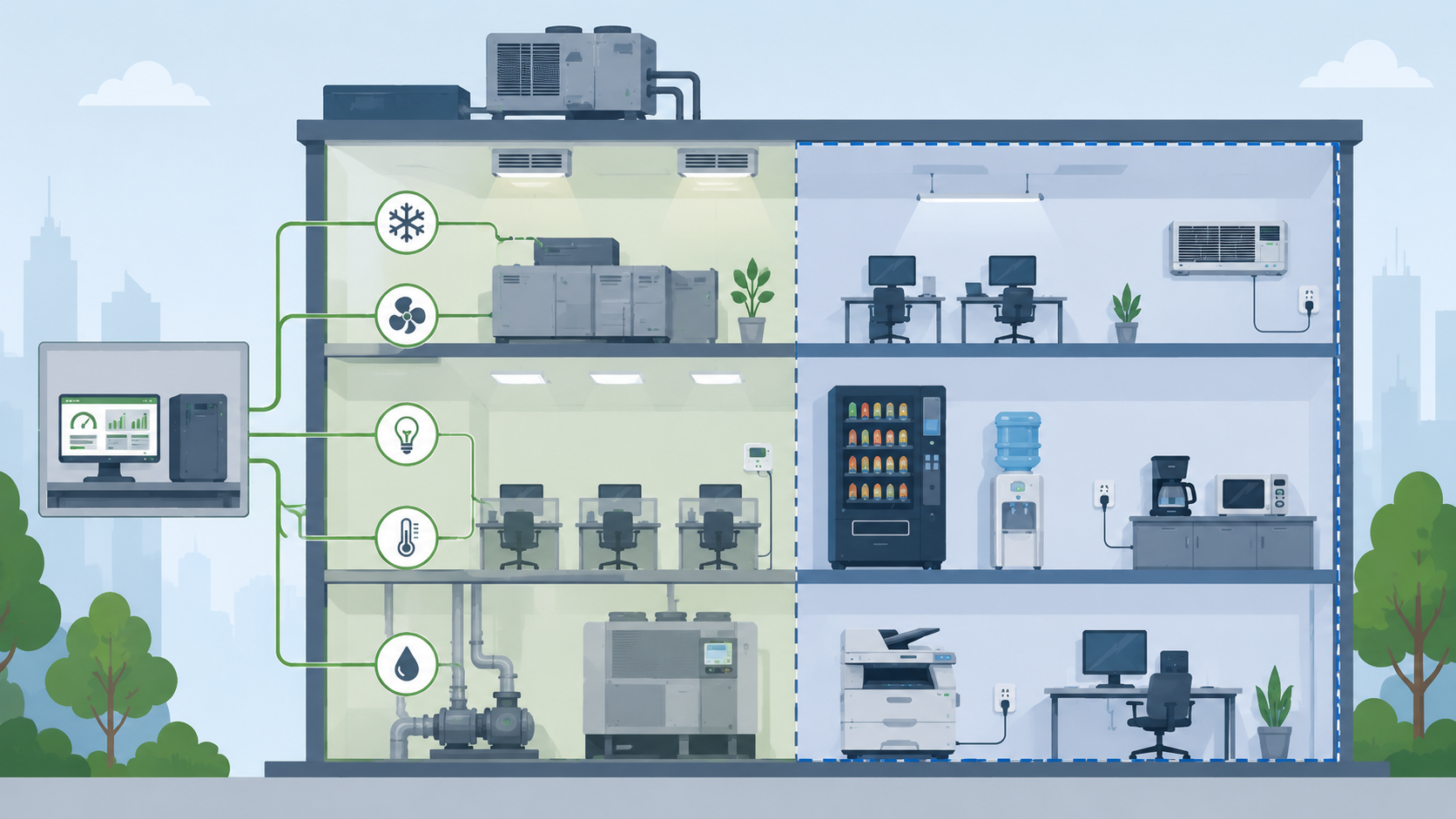
These loads, window air conditioners, packaged terminal air conditioners (PTACs), vending machines, water coolers, dehumidifiers, air purifiers, office equipment, and plug-in heaters, often operate outside the reach of traditional building automation systems (BAS). They run after hours, on weekends, during holidays, and when spaces are unoccupied. Individually small, they become significant when aggregated across a building portfolio.
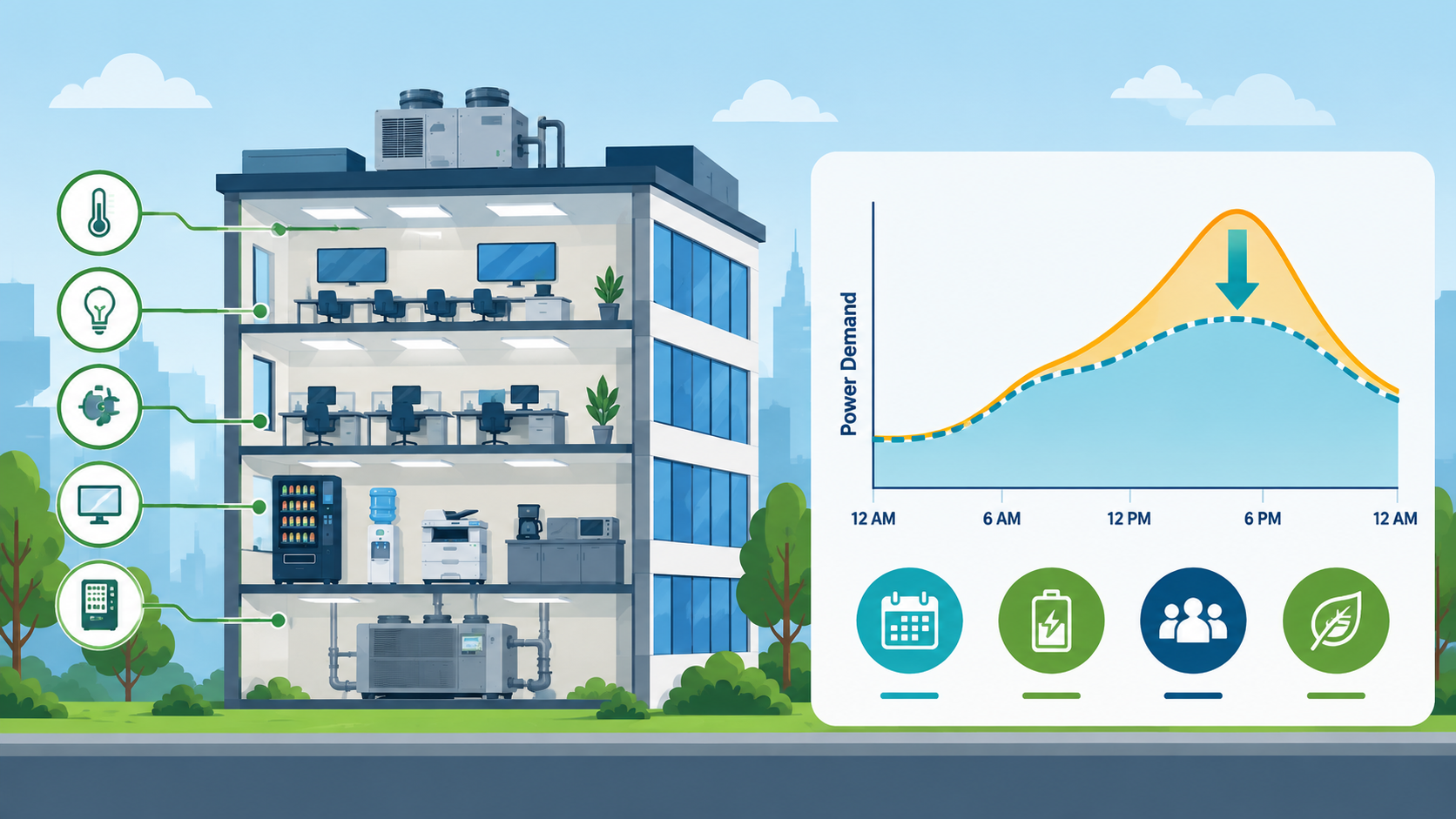
Demand response programs compensate participants for reducing load during grid emergencies or peak pricing events. For building owners, this creates a new revenue stream from existing equipment. For utilities and grid operators, it provides distributed, fast-responding capacity without waiting for new transmission or generation. The challenge has always been *reaching* these loads, making them visible, measurable, and controllable at scale.
How Appliance-Level Demand Response Works
The mechanics of appliance-level DR are straightforward in principle:
1. Identify controllable loads: Inventory plug-in devices that can be cycled, set back, or turned off without disrupting operations.
2. Connect and measure: Install smart load control devices (smart plugs, controllers) that communicate securely with a central platform.
3. Group and schedule: Organize devices by building, floor, room, equipment type, or custom groups. Set baseline schedules for normal operations.
4. Automate DR response: When a utility or grid operator signals an event, the platform automatically executes pre-approved reduction strategies: cycling compressors, adjusting setpoints, or powering down non-critical loads.
5. Measure and verify: Device-level meter data confirms actual load reduction, supports settlement, and builds the performance track record needed for ongoing program participation.
The BOSS Smart Edge platform (Atmospheres® software combined with smart load control hardware) demonstrates this approach in practice. It connects appliances via secure IoT connectivity, groups them into virtual control zones, and provides centralized scheduling, monitoring, and DR dispatch, all without replacing major building systems.
Operational Implications and Trade-offs
Occupant Comfort vs. Grid Value
The central tension in any DR program is balancing load reduction with occupant comfort and operational continuity. Appliance-level control offers more granularity than whole-building curtailment:
- Cycling vs. shedding: A window A/C unit can be cycled (e.g., 15 minutes off / 30 minutes on) rather than fully shut off, maintaining acceptable temperatures while reducing average demand.
- Zoned strategies: Critical areas (server rooms, labs, occupied offices) can be excluded while common areas, unoccupied floors, or storage spaces contribute load reduction.
- Pre-cooling/pre-heating: Buildings with thermal mass can pre-condition spaces before an event, then coast through the curtailment period.
The key is defining these strategies in advance with facility teams and occupants, then automating execution so no manual intervention is needed during an event.
Measurement and Verification Requirements
DR programs require proof of performance. Settlement is typically based on measured reduction against a baseline (e.g., the average of the previous 10 non-event, non-holiday weekdays). Device-level metering is essential because:
- Whole-building meters can’t isolate the contribution of specific DR actions from other variables (weather, occupancy changes, equipment failures).
- Aggregated appliance data provides an audit trail: which devices responded, by how much, and32 for how long.
- Historical device data improves baseline accuracy over time, reducing settlement disputes.
Revenue Potential and Program Types
DR revenue varies by market and program structure:
| Program Type | Typical Trigger | Response Time | Duration | Compensation Model |
|---|---|---|---|---|
| Capacity/Reserve | Grid emergency, reliability event | 10–30 minutes | 1–4 hours | $/kW-year (capacity payment) + energy payment |
| Economic/Price Response | High wholesale prices | Day-ahead or hour-ahead | 1–6 hours | Energy price arbitrage ($/MWh) |
| Ancillary Services | Frequency regulation, voltage support | Seconds to minutes | Seconds to minutes | $/MW for regulation capacity |
| Utility Peak Rebate | Utility-defined peak days | 2–4 hours notice | 2–4 hours | $/kW reduced per event |
For a portfolio of 500 controllable window A/C units (avg. 1.2 kW each), a 30% cycling strategy yields ~180 kW of dispatchable capacity. At $50/kW-year in a capacity market, that’s $9,000/year from equipment already in place.
Real-World Examples
New York City: Legacy Window A/C Loads
In a NYC commercial office deployment, BOSS connected 120V and 220V legacy window A/C units across older office space using grid-interactive smart plugs. Results during the May–September cooling season included:
- Energy savings from off-hours automation
- Demand response revenue from utility program participation
- Measured energy reduction and avoided CO₂ emissions
- Improved visibility into legacy appliance operation patterns
This demonstrates that even older buildings with no BAS can become DR participants without infrastructure replacement.
City of Pittsburgh: Municipal, University, and Commercial Portfolio
A cross-sector project in Pittsburgh demonstrated plug-load measurement and control across municipal facilities, university buildings, and commercial properties. The deployment showed how controllable plug loads can support:32
- Rapid energy savings through scheduling
- Demand response event participation
- Peak load management
- A pathway to broader virtual power plant (VPP) value
For cities and public agencies managing diverse, aging building stock, appliance-level DR offers a practical entry point with no major capital projects required.
Education Campuses: Long Vacancy Periods, Dynamic Schedules
Schools and universities have distinct DR advantages: predictable long vacancies (summer, winter break, weekends), high densities of plug loads (vending machines, water fountains, window HVAC, computers, TVs), and centralized facility management. BOSS education deployments have targeted:
- Vending machines and water fountains (continuous loads, easily scheduled)
- Window A/C units and electric heaters in dormitories and classrooms
- Office equipment and common-area appliances
Facility teams can schedule devices by building, floor, or room type, aligning DR participation with academic calendars and occupancy patterns.
From Demand Response to Virtual Power Plants
Demand response is often the first step toward virtual power plant (VPP) participation. A VPP aggregates distributed energy resources (DERs), including controllable loads, behind-the-meter storage, solar, and EVs, to provide grid services at scale. The same appliance-level connectivity and control that enables DR also creates the foundation for VPP participation:
- Device-level telemetry supports real-time dispatch and market settlement.
- Secure, standardized communication enables integration with utility DER management systems (DERMS) or third-party aggregators.
- Automated response logic can be extended from simple event-based curtailment to dynamic, price-responsive optimization.
For building owners, this means the investment in appliance-level controls pays off twice: immediate DR revenue and energy savings today, plus option value for future VPP and transactive energy markets.
Key Considerations for Getting Started
Load inventory | Walk the building. Catalog plug loads by type, location, voltage, and operating hours. Prioritize high-draw, long-runtime, predictably unoccupied devices.
Baseline establishment | Collect 30+ days of device-level data before enrolling in a program. This improves baseline accuracy and identifies savings opportunities beyond DR.
Occupant engagement | Communicate early. Explain what will happen during events, why it matters, and how comfort is protected. Get buy-in on exclusion zones.
Cybersecurity | DR platforms connect to utility/ISO systems. Choose solutions with dedicated, encrypted IoT connectivity, not open Wi-Fi or shared building networks.
Program selection | Match program requirements (notification lead time, response duration, metering standards) to your building’s operational flexibility. |
Measurement plan | Ensure device-level interval data (15-min or better) is captured, stored, and exportable for settlement and M&V.
Demand response turns the cost of wasted energy into the value of grid flexibility. The appliances are already there. The question is whether they’re working for you, or just running.
Key Takeaways
- Plug loads are an overlooked DR resource: Window A/C units, PTACs, vending machines, water coolers, dehumidifiers, and office equipment represent gigawatts of controllable capacity nationwide.
- Appliance-level control enables granular, comfortable DR: Cycling and zoning strategies reduce load without whole-building disruption.
- Device-level metering is non-negotiable: It supports accurate baselines, settlement, M&V, and ongoing optimization.
The same infrastructure unlocks VPP participation: DR is the entry point; VPP is the longer-term value stream. - Start with an assessment: Identify controllable loads, estimate capacity, and evaluate program fit before investing in hardware.
- No major capital required: Retrofit smart plugs and controllers work with existing appliances and electrical infrastructure.
In this Article