
Quick Summary
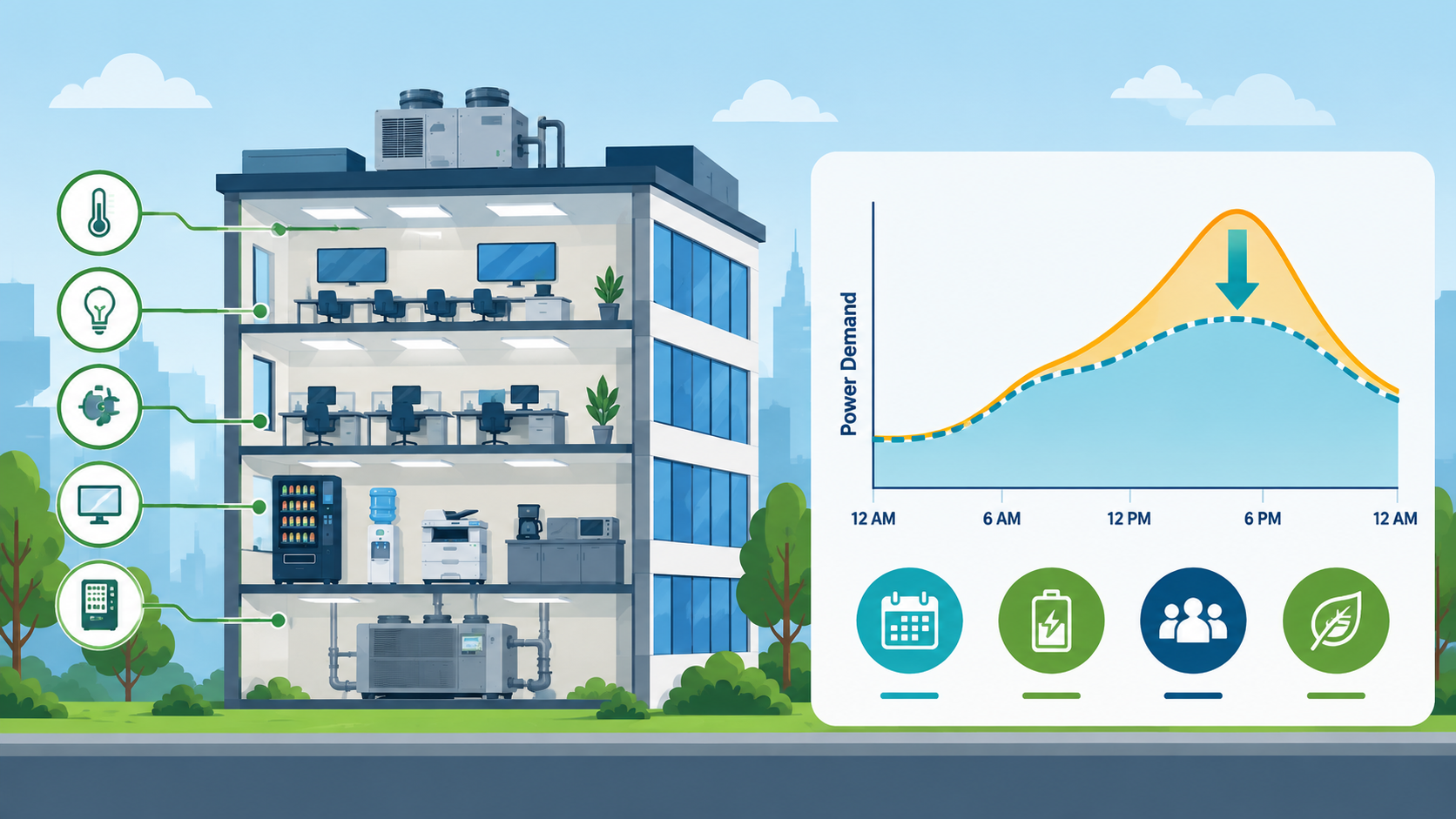
Peak shaving reduces a building’s highest power consumption points to lower demand charges, which can represent 30 to 70 percent of commercial electricity bills [1]. The strategy works by scheduling high-consuming appliances to avoid peak periods, using thermal or battery storage, and participating in demand response programs. For many facilities, peak shaving delivers ROI within 1 to 3 years without replacing building systems, and battery storage becomes attractive where demand charges exceed roughly $15 per kW per month [2, 3].
Understanding Demand Charges
Commercial electricity bills have two major cost components: energy charges (based on total kWh consumed) and demand charges (based on the highest 15-minute or 30-minute power draw in a billing period). Energy charges reward overall conservation, but demand charges penalize instantaneous peak consumption, regardless of when that peak occurs [1].
In many markets, especially PJM and Northeast regions, demand charges can represent 30 to 70 percent of a commercial building’s annual electricity cost [1, 4]. A single spike during peak hours can set the demand charge for the entire month, which creates a major opportunity to lower costs through peak shaving.
Why Peak Demand Matters
Peak demand has become more acute as electricity prices rise. PJM capacity auction prices for the 2025/2026 delivery year cleared at $269.92 per MW-day, up from $28.92 per MW-day the prior year, a nearly tenfold increase driven by tightening supply and rising demand [5, 6]. Reuters reported the jump as exceeding 800 percent [6], and some Pennsylvania and Mid-Atlantic load zones cleared even higher. Demand charges scale with these increases, so a facility paying $10,000 per month today could pay substantially more in a few years. Peak shaving is now an essential operational strategy, not optional efficiency work.
Peak Shaving Strategies Without Storage
Many buildings can achieve meaningful demand reduction through operational strategies alone, without investing in battery systems.
Load Scheduling and Occupancy-Based Control
Unmanaged appliances often run during peak grid periods, even when not essential. Plug-load devices, including window AC units, PTACs, vending machines, water coolers, dehumidifiers, and office equipment, frequently operate during unoccupied periods or high-cost times [7]. Coordinated scheduling can shift or reduce these loads: after-hours shutdown (turn off non-essential equipment before 6 AM and after 6 PM), weekend and holiday control (disable or reduce schedules during closed periods), and peak-period reduction (reduce non-critical loads during grid peak hours, typically 2 to 8 PM in summer and 6 to 10 AM in winter).
Case study data from municipal deployments show that schedule-based control of high-consuming plug loads (vending machines, water coolers) achieved 50 percent or greater energy savings on those devices, with simple paybacks under one year. In a regional project, facility teams controlled plug loads across municipal buildings and universities, reducing peak demand costs while improving device-level visibility.
Thermal Energy Management
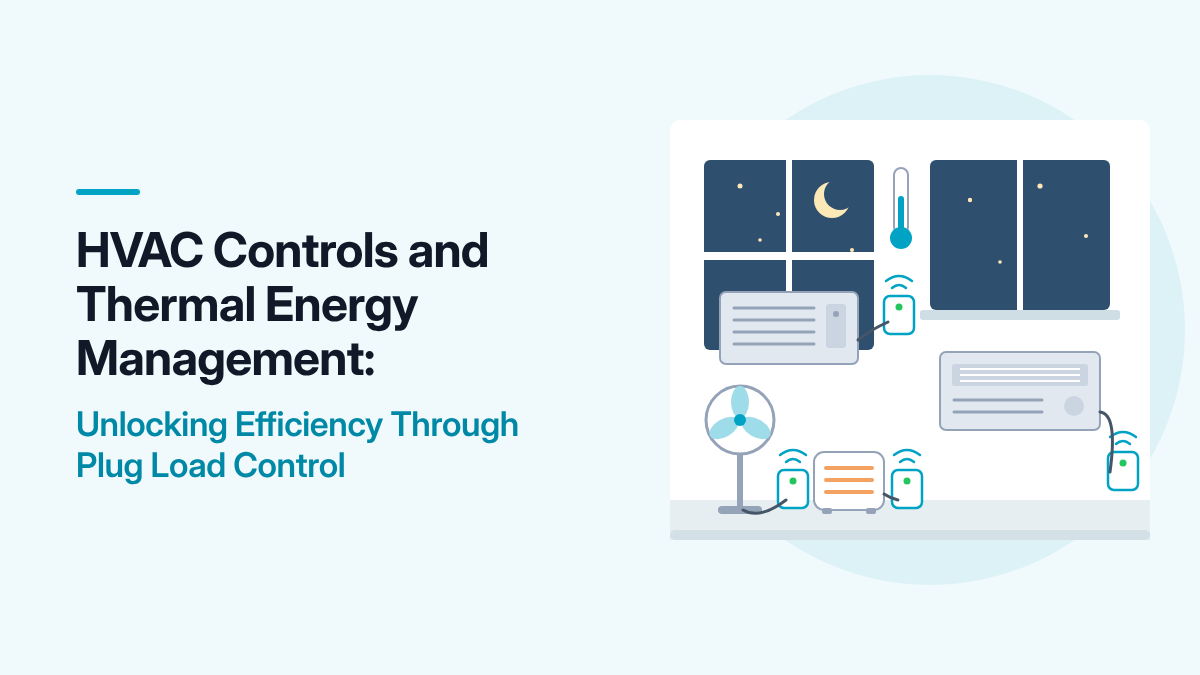
Buildings with chilled-water systems or thermal storage can shift cooling load outside peak periods: precool the building structure or water tanks during off-peak, low-cost hours; gradually raise setpoints during peak periods with occupant comfort in mind; and adjust outdoor air intake through demand-controlled ventilation to reduce HVAC load during peak times.
HVAC systems often represent the largest load in commercial buildings. Even small adjustments to cooling schedules can reduce peak demand by 10 to 20 percent without affecting occupant comfort. The goal is to flatten the load profile so no single 15-minute interval sets an artificially high demand charge for the whole month.
Peak Shaving with Energy Storage
Battery energy storage and advanced controls can amplify peak shaving results by providing onsite power during peak periods. A battery watches facility demand and discharges before grid draw exceeds a control threshold, capping the peak the utility meter records [2, 8].
Battery Economics
Energy storage makes financial sense when demand charges exceed roughly $15 per kW per month, when utility rates include time-of-use pricing, when regional demand response programs offer incentive revenue, or when a building has a consistent daily peak profile [2, 3]. NREL research finds that lithium-ion storage systems can achieve payback periods below 5 years, and as low as 3 years, in markets with high demand charges [3]. Clean Energy Group estimates that more than five million U.S. commercial customers face demand charges high enough to make battery storage economic for demand-charge management [2].
A typical commercial battery system (50 to 100 kWh) costs $20,000 to $50,000 installed. If a facility’s demand charge is $15 per kW and the system reduces peak by 50 kW, annual savings would be $9,000 assuming monthly billing, for a simple payback of roughly 2.5 to 5.5 years. Falling battery costs and the 30 percent federal Investment Tax Credit for standalone storage have improved these economics. Some facilities in high-cost regions (Northeast, California) can achieve payback in 2 to 3 years, making hybrid solar plus storage viable [9].
Hybrid Solar and Storage Approach
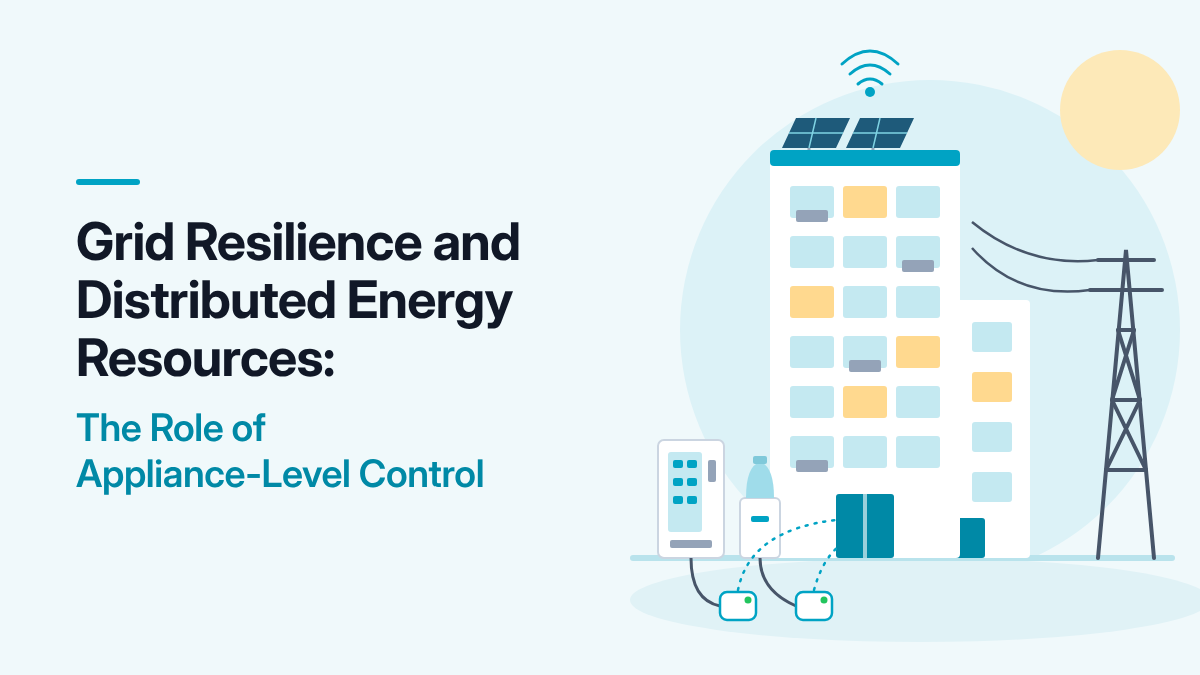
On-site solar generation can reduce overall energy charges and daytime peak demand. NREL found that co-deploying solar plus storage yields a median billing demand reduction of 42 percent, compared with 8 percent for solar alone and 23 percent for storage alone [9]. Combined systems cut energy charges through on-site generation, reduce demand charges by discharging battery power during peaks, provide backup power during grid stress events, and support utility demand response programs.
Demand Response Program Integration
In a New York City public-sector deployment, a facility connected legacy window air conditioning units using smart plugs across 120V and 220V circuits. The deployment achieved roughly $114,700 in energy savings plus $125,700 in demand response revenue over five months, demonstrating the dual value of appliance-level control. (These figures are drawn from the project deployment case study; independent third-party verification was not published.) To participate effectively in demand response: measure baseline consumption to find flexible loads, create control strategies for loads that can be reduced without disruption, automate dispatch to utility signals, and verify performance by reporting actual load reduction.
Building Profiles That Benefit Most
Peak shaving delivers the strongest returns for commercial office buildings, multi-tenant properties, government and municipal facilities, and educational institutions with high HVAC loads and long operating hours, especially in Northeast, PJM, and California markets. The best candidates have many plug loads (vending machines, water coolers, window AC), existing thermal mass or chilled-water systems, scheduling flexibility, and predictable peak periods (most commercial peaks occur 2 to 8 PM in summer).
Implementation Steps
1. Audit and baseline: measure current peak demand and identify contributing loads using utility bills, sub-metering data, or building automation systems.
2. Identify quick wins: start with high-consuming, easily controlled loads such as vending machines, PTACs, and after-hours equipment.
3. Implement operational changes: deploy scheduling, occupancy-based control, and thermal adjustments. Many can be done with existing systems.
4. Measure and verify: track demand charges against baseline, then quantify savings to justify expansion or storage investment.
5. Consider storage and solar if ROI aligns: evaluate battery systems or solar if operational strategies alone fall short of savings targets.
6. Participate in demand response: enroll in utility programs to monetize remaining flexibility.
Key Takeaways
- Demand charges can be 30 to 70 percent of commercial electricity bills, and peak shaving targets this controllable cost [1].
- PJM capacity prices surged nearly tenfold for the 2025/2026 delivery year, making demand charge management more urgent than ever [5, 6].
- Operational changes (scheduling, thermal management, appliance control) are the fastest, lowest-cost starting point, and many deliver ROI under one year.
- Battery storage adds value in high-rate regions, with NREL-confirmed payback below 5 years where demand charges exceed about $15 per kW per month [2, 3].
- Building-specific factors (load composition, occupancy patterns, local rates) determine the best strategy, so start with measurement and audit.
- Demand response participation can double the financial benefit, since utilities pay for grid-supporting load reduction.
References
1. USDA Forest Service, “Saving Money by Understanding Demand Charges on Your Electric Bill.” https://www.fs.usda.gov/t-d/pubs/htmlpubs/htm00712373/index.htm
2. Clean Energy Group, “Millions of Commercial Customers Could Cut Costs with Battery Storage.” https://www.cleanegroup.org/millions-commercial-customers-cut-costs-battery-storage/
3. NREL, “Overview of Distributed Energy Storage for Demand Charge Reduction,” via OSTI. https://www.osti.gov/servlets/purl/1496630
4. U.S. Department of Energy, “Myth-Busting: Market Barriers To Advanced Power Strips” https://betterbuildingssolutioncenter.energy.gov/myth-busting-market-barriers-advanced-power-strips
5. Congressional Research Service, “PJM’s Electric Capacity Market,” R48553. https://www.congress.gov/crs-product/R48553
6. Reuters, “PJM power auction results yield sharply higher prices,” July 31, 2024. https://www.reuters.com/business/energy/pjm-power-auction-results-yield-sharply-higher-prices-2024-07-31/
7. Inside Lighting, “What Is Plug Load Control and Why It Matters.” https://inside.lighting/news/26-03/what-plug-load-control-and-why-it-matters
8. NYSERDA, “How Energy Storage Can Reduce Electricity Costs for Commercial Energy Users.” https://www.nyserda.ny.gov/-/media/Project/Nyserda/Files/Programs/Energy-Storage/How-Energy-Storage-Can-Reduce-Electricity-Costs-for-Commercial-Energy-Users.pdf
9. NREL, “Solar + Storage Synergies for Managing Commercial Demand Charges,” NREL/TP-7A40-70360. https://docs.nlr.gov/docs/fy18osti/70360.pdf