
Quick Summary
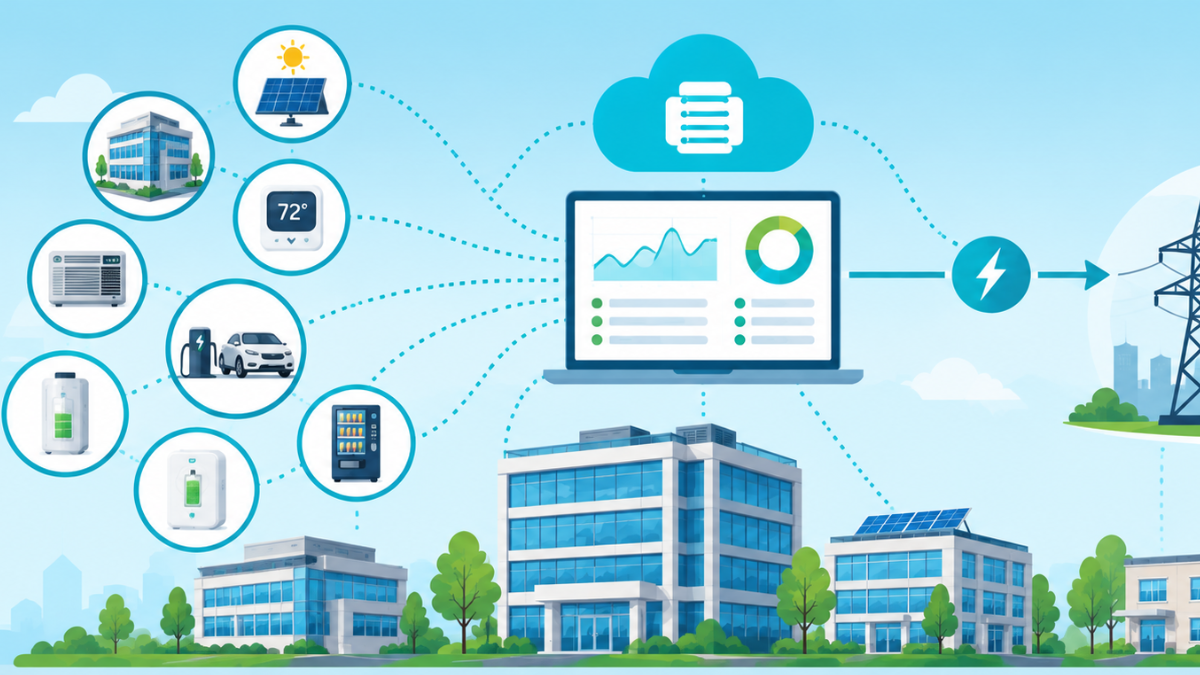
A virtual power plant (VPP) is not a building, a turbine, or a single piece of hardware. It is a coordinated fleet of small energy devices (home batteries,
rooftop solar, smart thermostats, electric water heaters, EV chargers, window A/C units, vending machines, and flexible commercial loads) that software
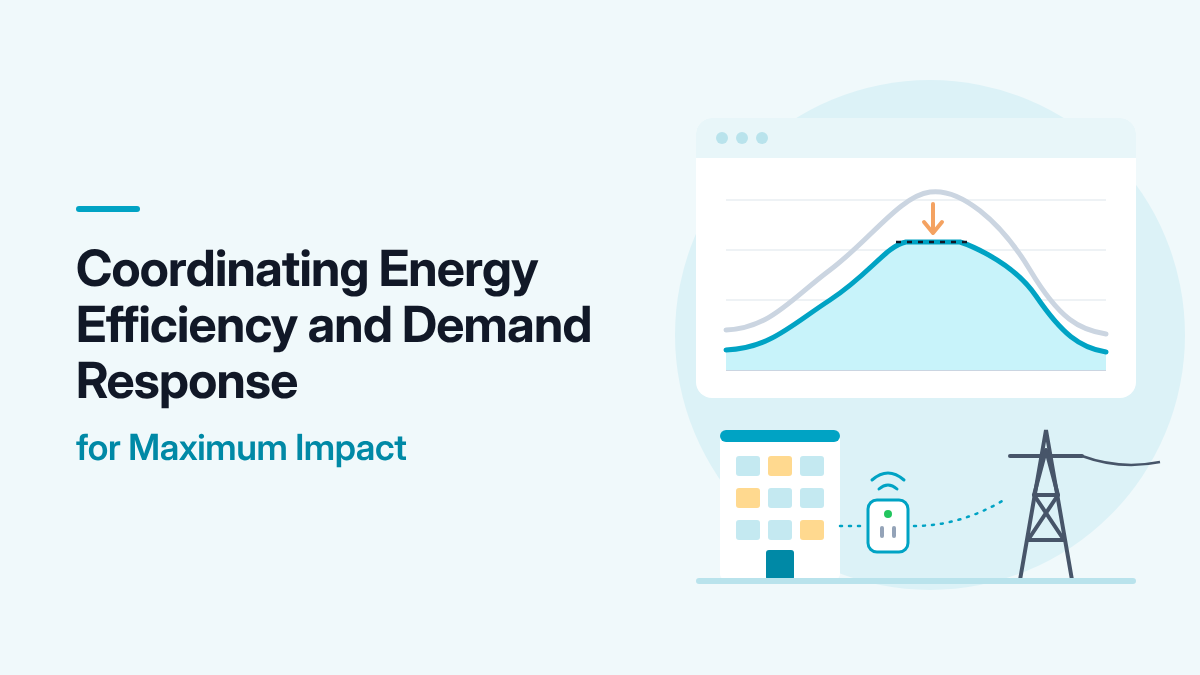
pools together and operates as if it were one power plant. Individually, each device is too small to matter to a grid operator. Aggregated and dispatched
in unison, they can deliver hundreds of megawatts on command.
This article walks through the mechanics: what goes into a VPP, how the software stack forecasts, bids, dispatches, and verifies performance, how money
flows from the grid back to end users, and what rules (like FERC Order No. 2222) make it possible. It also looks at real-world proof points, including
California’s record-setting battery dispatches in 2025 and 2026, and the barriers still slowing growth.
The short version: VPPs turn thousands (or millions) of small, scattered decisions into one reliable, dispatchable resource. The U.S. Department of Energy
sees a path to 80–160 GW of VPP capacity by 2030, and independent analysis suggests VPPs can supply peak capacity at roughly 40–60% of the cost of
conventional alternatives.
Why the Grid Suddenly Cares About Your Thermostat
For most of the last century, the electric grid ran on a simple principle: demand is whatever customers want it to be, and supply must chase it. When
everyone cranked up the air conditioning on a July afternoon, utilities fired up “peaker” plants, usually natural gas units that sit idle for most of the year
and run only during the handful of hours when demand is highest. Those plants are expensive to build and expensive per unit of energy delivered,
precisely because they are used so rarely.
That model is under pressure from several directions at once. Peak demand is rising again after years of flat growth, driven by data centers, building and
vehicle electrification, and new manufacturing. At the same time, older fossil plants are retiring, and new large-scale generation and transmission
projects face long interconnection queues. The DOE’s original VPP Liftoff report, released in September 2023, estimated that the U.S. would need to add
enough new capacity to serve over 200 GW of peak demand by 2030 [1].
Meanwhile, something else has been quietly happening in homes and businesses: an explosion of devices that are both connected to the internet and
capable of changing when and how much electricity they use, or even pushing power back to the grid. A Powerwall in a garage, a Nest thermostat on a
hallway wall, a Level 2 EV charger in a driveway, window A/C units and vending machines connected to smart plugs: each is a tiny, controllable grid asset.
The insight behind the VPP is that the grid doesn’t need to build a new 500 MW peaker if it can reliably coordinate 500 MW worth of these existing
devices instead.
What Exactly Is a Virtual Power Plant?
Definitions vary slightly across the industry, but they converge on the same idea. Dominion Energy, for instance, defines a VPP as a group of distributed
energy resources, enrolled either directly with a utility or through a third-party aggregator, that are operated together to provide one or more grid
services [8].
The building blocks are distributed energy resources (DERs). The Federal Energy Regulatory Commission describes DERs as small-scale generation or
storage technologies, typically ranging from about 1 kW to 10,000 kW, located on the distribution system or behind a customer’s meter. The category is
broad: electric storage, rooftop solar and other distributed generation, demand response, energy efficiency, thermal storage, and electric vehicles with
their chargers all qualify [4].
It helps to sort DERs into three functional types, because each contributes to a VPP differently:
1. Generators: rooftop solar, small combined heat and power units, backup generators. These add energy.
2. Storage: home and commercial batteries, and increasingly EV batteries. These can shift energy in time: charge when power is cheap and plentiful,
discharge when it is scarce.
3. Flexible loads: smart thermostats, heat pumps, water heaters, pool pumps, EV charging, devices connected by smart plugs, and industrial
processes. These don’t produce power, but reducing or delaying their consumption has the same effect on the grid’s supply-demand balance as
adding generation. (This is why industry veterans sometimes call demand reduction “negawatts.”)
A VPP can be built from any mix of these. Some of the largest North American VPPs are made up almost entirely of smart thermostats; others, especially
in California, are dominated by home batteries paired with solar.
VPP vs. DERMS vs. Aggregator
Three terms get used interchangeably but mean slightly different things:
- Aggregation is the underlying act of pooling many small resources so they collectively meet the size thresholds needed to participate in markets
or programs. - A DERMS (Distributed Energy Resource Management System) is the software layer that monitors, forecasts, and controls DERs. Utilities often
use DERMS to manage local distribution constraints such as voltage and transformer loading. - A VPP uses DERMS-type capabilities as its core but adds market participation and the delivery of grid services on top. As researchers at the
National Renewable Energy Laboratory put it, a DERMS is a central component of a VPP, but a VPP encompasses more, including participating in
energy markets [7].
In practice, the lines are blurring as software platforms converge these functions into single products.
How a VPP Actually Works: The Mult-Layer Stack
It’s useful to think about a VPP as a stack of layers, from the physical device at the bottom to the market transaction at the top.
Layer 1: The Devices and Their Controls
Everything starts with a device that can be told what to do. Modern batteries, thermostats, inverters, and EV chargers ship with communication
capabilities (Wi-Fi, cellular, or a utility’s own network) and an interface that accepts commands such as “discharge at 5 kW for two hours” or “pre-cool the
house by two degrees, then raise the setpoint.”
Crucially, the device owner sets guardrails. A home battery owner typically chooses a backup reserve level that the VPP will never dip below, so the
household retains power for outages. Thermostat programs typically let customers override any event. Those constraints aren’t a bug; they’re a core
input the VPP software must respect.
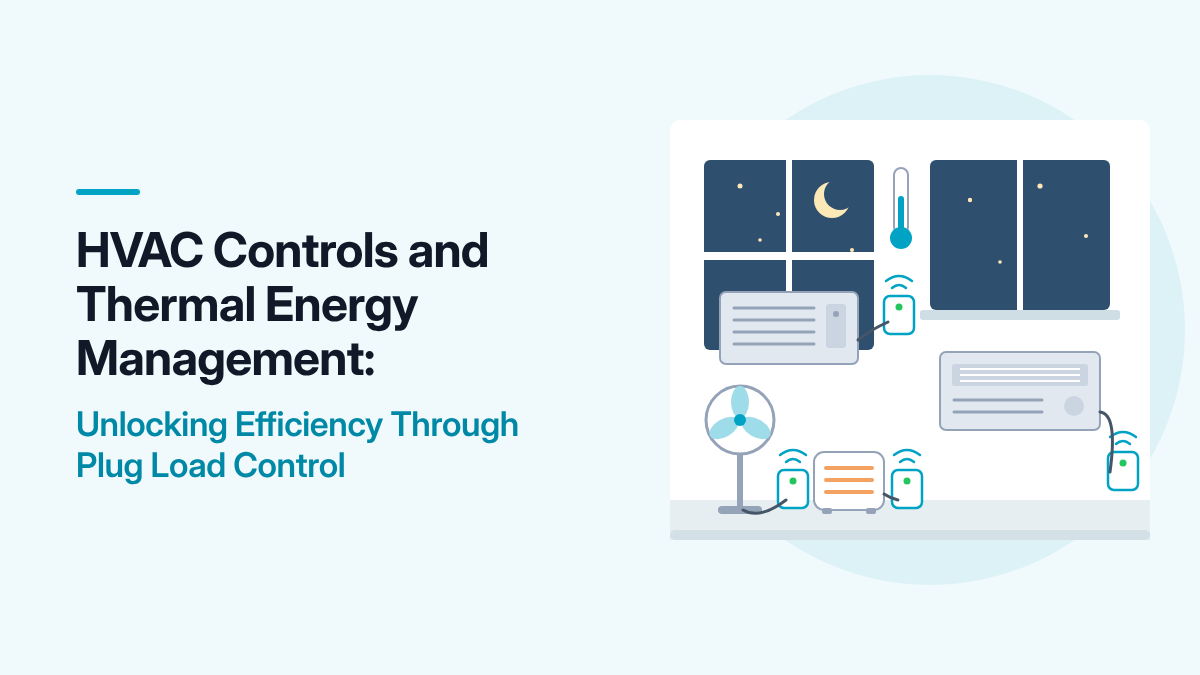
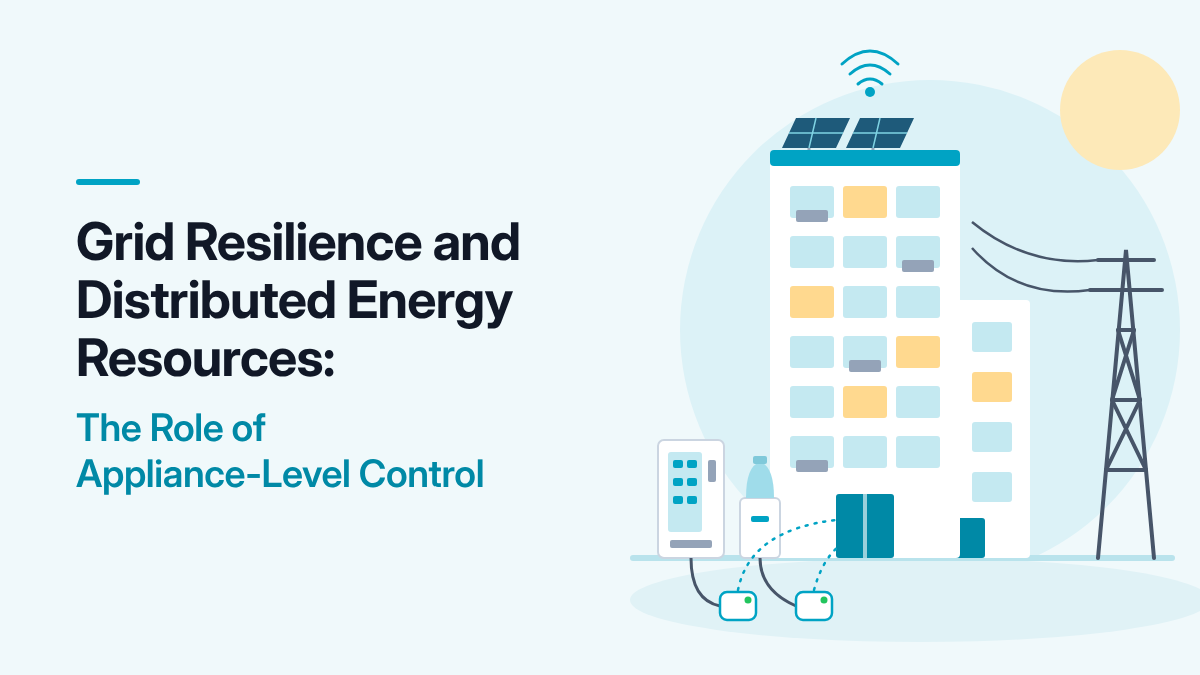
Legacy devices (e.g. window A/C units, vending machines, water coolers, etc) can be connected and controlled via wireless-enabled smart plugs.
Layer 2: Telemetry and Connectivity
The VPP needs to know, continuously, what each device is doing and what it could do. That means a steady stream of data: state of charge for batteries,
indoor temperature and HVAC status for thermostats, plug-in status and target departure time for EVs, and real-time power flow at the meter. In the
2025 California test described below, analysts worked from five-minute and 15-minute telemetry provided by the aggregators [13].
Telemetry is also what makes a VPP credible to a grid operator. A gas plant’s output is metered at one point; a VPP’s output is the sum of thousands of
meters, and it has to be provable.
Layer 3: Forecasting and Optimization
This is where the “virtual” in virtual power plant really lives. Before the aggregator can promise the grid anything, its software must answer questions like:
- How many enrolled devices will be online and available tomorrow at 6 p.m.?
- How much energy will each battery have after today’s solar production and household use?
- How many thermostat customers are likely to override an event on a 105°F day?
- How much load reduction does “pre-cooling” actually buy, given the home or building thermal characteristics?
Optimization engines take those forecasts and solve for the best plan (which devices to dispatch, at what power level, and for how long) while respecting
every customer’s constraints. Because no single device is critical, the portfolio effect works in the VPP’s favor: if a few percent of devices go offline or opt
out, others can make up the gap. Well-run VPPs often over-enroll relative to their commitments to build in that reliability margin.
Layer 4: Dispatch
When an event is called, the platform sends commands to every participating device, usually within seconds. Batteries begin discharging, thermostats
adjust setpoints, water heaters pause, smart plugs turn off window A/C units, EV chargers slow or stop. The aggregated output, measured as either
energy injected into the grid or load removed from it, is what the grid sees.
Dispatch triggers vary by program. Some are emergency-only, activated when the grid operator declares a reliability alert. Others are economic:
California’s Demand Side Grid Support (DSGS) program, for example, dispatches when day-ahead prices in the CAISO market exceed $200 per megawatt
hour [15]. The most sophisticated VPPs participate daily, bidding into energy and ancillary service markets the same way a conventional plant would.
Layer 5: Measurement, Verification, and Settlement
After the event, someone has to prove what was delivered. For batteries exporting to the grid, the measurement is relatively clean: meters show the
power that flowed out. For demand reduction, it’s harder, because you are measuring something that didn’t happen: energy that would have been
consumed but wasn’t. That requires a baseline, an estimate of what the customer would have used absent the event, typically calculated from similar
recent days.
Once performance is verified, money flows: the grid operator or utility pays the aggregator, and the aggregator pays the customers.
Following the Money
A VPP only works if every participant gets something out of it. The value chain looks like this:
- The grid operator or utility gets capacity, energy, or grid services at lower cost than building or contracting a conventional plant.
- The aggregator earns revenue from markets or utility contracts and keeps a share for running the platform.
- The customer receives a payment, bill credit, or discounted equipment in exchange for letting the aggregator occasionally use their device.
The payments to customers can be meaningful. Sunrun has said it pays participating customers $150 per battery per dispatch season in its California
program [14].
The system-level economics are what make VPPs strategically interesting. In a study prepared for Google, The Brattle Group modeled the cost of
providing 400 MW of resource adequacy (the capacity needed to reliably meet peak demand) from three options: a natural gas peaker, a utility-scale
battery, and a VPP built from residential demand flexibility. Brattle found the VPP’s net cost to the utility was roughly 40–60% of the alternatives, and
that 60 GW of VPP deployment could meet future U.S. resource adequacy needs at a net cost $15–35 billion lower than conventional options over a
decade [9].
Why so much cheaper? Because the devices already exist. The customer bought the battery for backup power or bought the thermostat for comfort. The
VPP is harvesting latent flexibility from hardware someone else has already paid for, rather than building new generating capacity. The DOE reaches a similar conclusion at national scale: tripling VPP capacity to 80–160 GW by 2030 could cover 10–20% of peak load and save roughly $10 billion per year in grid costs by avoiding new generation, deferring infrastructure investment, and running fewer expensive peakers [2].
What Services Can a VPP Provide?
A common misconception is that VPPs only do one thing: shave peaks on hot summer afternoons. That is the most familiar use case, but a well-designed
VPP can stack several services:
- Peak capacity (resource adequacy): Being available to reduce load or inject power during the highest-demand hours of the year.
- Energy arbitrage: Charging batteries when prices are low (often midday, when solar floods the grid) and discharging when prices spike in the
evening. - Ancillary services: Fast-response services such as frequency regulation and operating reserves, where batteries’ near-instant response times are
an advantage over thermal plants. - Distribution relief: Reducing load on a specific overloaded feeder or substation, potentially deferring an expensive upgrade.
- Renewable integration: Soaking up excess solar during the day and smoothing the steep evening “ramp” when solar fades but demand stays high.
- Emergency backstop: Providing additional margin during heat waves, cold snaps, or unexpected plant outages.
The ability to stack these revenue streams is a big part of what makes a VPP’s economics work.
The Rulebook: FERC Order No. 2222
Technology alone doesn’t create a VPP market; rules do. Historically, wholesale electricity markets were designed around large generators, and small
resources struggled to participate even when aggregated.
In September 2020, FERC issued Order No. 2222, directing regional grid operators (RTOs and ISOs) to let DER aggregations compete alongside
traditional resources in their capacity, energy, and ancillary service markets [4]. Among other requirements, the order sets a minimum aggregation size no
larger than 100 kW and requires grid operators to establish rules for location, metering and telemetry, and coordination among the grid operator,
aggregator, distribution utility, and state regulators [5].
The order preserved an important division of labor: states and local authorities still govern the interconnection of individual DERs, even when those
resources participate in wholesale markets through an aggregation. Implementation has been gradual, with each regional operator filing its own
compliance plan. PJM, for example, allows an individual component DER of up to 5 MW within an aggregation [6].
Outside organized wholesale markets, most VPPs operate through utility programs (bring-your-own-device thermostat programs, battery incentive
programs, managed EV charging tariffs), which are governed by state utility commissions.
Proof Points: VPPs in the Real World
For years, skeptics asked whether a swarm of small devices could really behave like a power plant. Recent events in California have gone a long way
toward answering that.
July 29, 2025. In a planned statewide test, more than 100,000 residential batteries sustained 539 MW of output for two hours during the evening peak[17]. An analysis by The Brattle Group, commissioned by Sunrun and Tesla, concluded that behind-the-meter batteries could serve CAISO’s net peak,
reducing the need for new generation and easing strain during the evening ramp. The batteries spanned three utility territories, with 279 MW in PG&E’s
service area [13]. Brattle separately estimated that the DSGS program could produce net system cost savings of $28 million to $206 million between 2025
and 2028 [12].
September 9, 2026. During a heat wave earlier this month, Sunrun and Tesla reported the largest distributed VPP dispatch yet: more than 580 MW
delivered to California’s grid over a three-hour evening window. About 110,000 Powerwalls participated, along with more than 30,000 batteries from
other manufacturers, coordinated through DSGS and the CPUC’s Emergency Load Reduction Program [15].
To put that in perspective, 580 MW is on the scale of a large natural gas plant, assembled entirely from equipment sitting in people’s garages and utility
rooms.
The broader market is growing as well. Wood Mackenzie’s 2025 North America VPP report counted 37.5 GW of behind-the-meter flexible capacity, a
13.7% year-over-year increase, with the number of deployments, offtakers, and monetized programs each growing by more than a third [10]. Utility Dive
reported the number of North American deployments rose to 1,940, up 33% from the prior year, with utilities increasingly turning to distributed
resources to help meet fast-growing data center demand [11].
What’s Still Holding VPPs Back
If VPPs are cheaper and proven, why aren’t they everywhere? A few persistent obstacles:
1. The market is broadening faster than it’s deepening. Wood Mackenzie’s data shows lots of new programs and participants, but total capacity is
growing more slowly. Its analysts pointed to utility program caps, capacity accreditation reforms, and market barriers as the reasons [10].
2. Small customers still face friction. Residential customers made up just over 10% of VPP wholesale market capacity in the 2025 report, up from 8.8%
the year before. Third-party access to customer data for enrollment and market settlement remains a primary blocker [16].
3. Accreditation and trust. Grid planners need confidence that a VPP will show up when called. That requires standardized methods for crediting VPP
capacity (how many megawatts of “firm” capacity is a 100 MW thermostat program worth?), and these methods are still evolving.
4. Coordination between transmission and distribution. A VPP dispatched for a wholesale market signal might unintentionally stress a local distributionfeeder. Order No. 2222 explicitly requires coordination between grid operators and distribution utilities, but building the systems and processes to do
that in real time takes time and investment.
5. Business model tension. There is an ongoing debate about whether utilities should own and rate-base DERs themselves or procure VPP capacity from
third-party aggregators. Each model affects who captures value and how quickly private capital flows into the market.
6. Program design limits. Many programs are still emergency-only or capped at a small number of events per year, which leaves a lot of value on the
table. Analysts reviewing California’s 2025 test suggested that lowering price triggers or dispatching based on net load could let the grid use distributed
batteries more often and more precisely [13].
The DOE’s January 2025 Liftoff update argued that deployment still needs to accelerate to reach the 80–160 GW target, and it laid out real-world case
studies and tools intended to help utilities and regulators get there [3].
What This Means for Homeowners, Utilities, and Businesses
For homeowners: If you own a battery, smart thermostat, heat pump, or EV, there is a good chance a program exists in your area that will pay you for
flexibility. Look for your utility’s demand response or “bring your own device” offerings, or check your battery or thermostat manufacturer’s app. Read
the terms carefully, especially backup reserve settings, the number of events per season, and your ability to opt out.
For utilities: VPPs offer a fast-to-deploy capacity resource at a time when large projects face years-long delays. The biggest wins come from simplifying
enrollment, designing programs that can be dispatched frequently rather than only in emergencies, and integrating VPPs into long-term resource
planning rather than treating them as side pilots.
For businesses: Commercial and industrial customers often have large, flexible loads (refrigeration, HVAC, pumping, process equipment) and on-site
storage or generation. These have long been the backbone of demand response, and aggregators can help businesses monetize that flexibility in both
utility programs and wholesale markets. The use of wireless smart plugs (e.g. BOSS Controls SmartEdge solution) can connect and control legacy devices
that are often overlooked as grid assets.
Conclusion
The phrase “virtual power plant” can sound like marketing jargon, but the mechanics are concrete. Devices report their status; software forecasts what
the fleet can do; the aggregator commits that capability to a utility or market; dispatch signals go out in seconds; meters verify what happened; and
payments flow back to the customers whose equipment made it possible.
What has changed in the last few years is scale and proof. Hundreds of megawatts of home batteries now respond on command in California. North
America’s VPP capacity is measured in tens of gigawatts. Federal rules have opened wholesale markets to aggregations, and independent analysts have
shown that VPPs can deliver peak capacity at a fraction of the cost of new peakers.
The remaining challenges are less about technology and more about rules, data access, and trust. As those are solved, the most important power plant of
the next decade may be the one nobody ever sees, spread across millions of homes and businesses, working together.
Key Takeaways
- A VPP is software-coordinated aggregation, not a physical plant: it pools batteries, solar, smart thermostats, water heaters, EV chargers, and
flexible commercial loads into one dispatchable resource. - It runs on a multi-layer stack: connected devices, real-time telemetry, forecasting and optimization, rapid dispatch, and measurement/verification
for settlement. - Customers keep control through guardrails such as battery backup reserves and event opt-outs, and they’re paid for participating.
- VPPs are cheaper than conventional peakers: Brattle estimates a net cost of roughly 40–60% of alternatives for providing resource adequacy.
- The national opportunity is large: DOE targets 80–160 GW of VPPs by 2030, covering 10–20% of peak load and saving about $10 billion per year.
- FERC Order No. 2222 opened wholesale markets to DER aggregations as small as 100 kW, though implementation varies by region.
- Real-world performance is proven at scale: California home batteries delivered 539 MW in July 2025 and more than 580 MW in September 2026.
- Growth is real but constrained: North American capacity reached 37.5 GW in Wood Mackenzie’s 2025 report, but program caps, accreditation rules, and data-access barriers are slowing deeper adoption.
Sources
1. U.S. Department of Energy: [DOE Releases New Report on Pathways to Commercial Liftoff for Virtual Power Plants](https://www.energy.gov/edf/articles/doe-releases-new-report-pathways-commercial-liftoff-virtual-power-plants) (September 2023)
2. U.S. Department of Energy: [Virtual Power Plants Projects](https://www.energy.gov/edf/virtual-power-plants-projects)
3. U.S. Department of Energy: [New Reports Highlighting Benefits of Consumer-Centric Solutions (VPP Liftoff 2025 Update)](https://www.energy.gov/technologycommercialization/articles/us-department-energy-releases-new-reports-highlighting) (January 2025)
4. Federal Energy Regulatory Commission: [FERC Order No. 2222: Fact Sheet](https://www.ferc.gov/media/ferc-order-no-2222-fact-sheet)
5. Federal Energy Regulatory Commission: [FERC Order No. 2222 Explainer](https://www.ferc.gov/ferc-order-no-2222-explainer-facilitating-participation-electricity-markets-distributed-energy)
6. PJM: [FERC Order 2222 and DERs](https://pjm.my.site.com/publicknowledge/s/article/FERC-Order-2222-and-DERs?language=en_US)
7. National Renewable Energy Laboratory: [Virtual Power Plants and Energy Justice](https://docs.nrel.gov/docs/fy24osti/86607.pdf)
8. Dominion Energy: [Virtual Power Plant Definitions](https://www.dominionenergy.com/-/media/content/save-energy/global/pdfs/global/virtual-power-plant-definitions.pdf)
9. The Brattle Group: [Real Reliability: The Value of Virtual Power](https://www.brattle.com/insights-events/publications/real-reliability-the-value-of-virtual-power/)
10. Wood Mackenzie: [Virtual Power Plant Capacity Expands 13.7% Year-over-Year to Reach 37.5 GW](https://www.woodmac.com/press-releases/virtual-power-plant-capacity-expands-13.7-year-over-year-to-reach-37.5-gw) (September 2025)
11. Utility Dive: [Data Center Demand Drives 33% Jump in VPP Deployments](https://www.utilitydive.com/news/data-center-vpp-virtual-power-wood-mackenzie/760731/) (September 2025)
12. Utility Dive: [California’s Virtual Power Plant Could Save $206M by 2028: Brattle](https://www.utilitydive.com/news/californias-virtual-power-plant-could-save-206m-by-2028-brattle/758145/) (August 2025)
13. Latitude Media: [Running the Numbers on Tesla and Sunrun’s Massive California VPP Test](https://www.latitudemedia.com/news/running-the-numbers-on-tesla-and-sunruns-massive-california-vpp-test/) (September 2025)
14. Energy-Storage.News: [Tesla, Sunrun Hail California Virtual Power Plant Test](https://www.energy-storage.news/tesla-sunrun-hail-win-win-for-the-household-and-the-grid-with-california-virtual-power-plant-test/) (August 2025)
15. Renewable Energy World: [580 MW Sent to the Grid in Largest-Ever VPP Dispatch](https://www.renewableenergyworld.com/energy-storage/battery/look-what-ders-can-do-580-mw-sent-to-the-grid-in-largest-ever-vpp-dispatch/) (September 2026)
16. Renewable Energy World: [US Virtual Power Plant Capacity Reaches 37.5 GW, Says Wood Mackenzie](https://www.renewableenergyworld.com/power-grid/us-virtual-power-plant-capacity-reaches-37-5gwh-over-last-year-says-wood-mackenzie/) (September 2025)
17. ESS News: [California Home Batteries Set VPP Dispatch Record During Heat Wave](https://www.ess-news.com/2026/09/28/california-home-batteries-set-vpp-dispatch-record-during-heat-wave/) (September 2026)